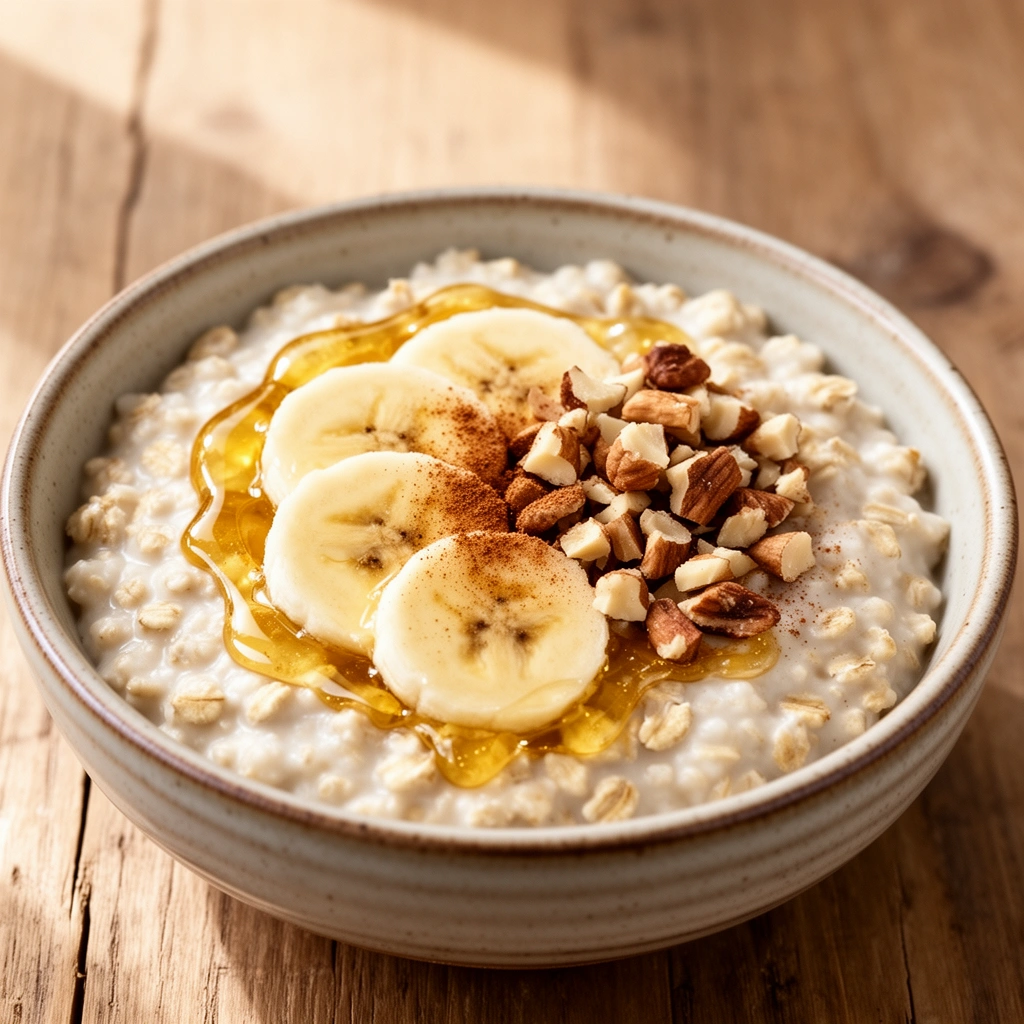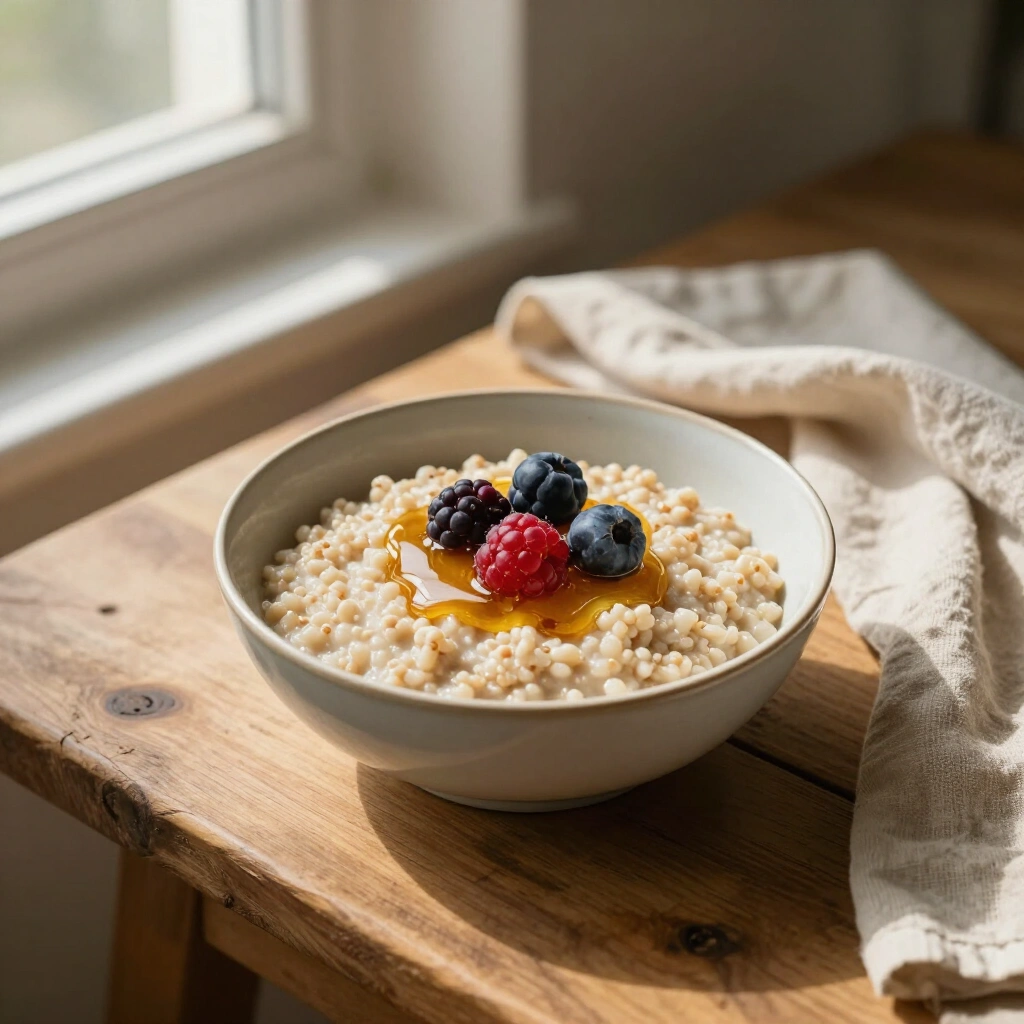

Let me be honest with you , I slept on millet for way too long. I used to walk right past it at the grocery store, assuming it was just bird feed. Then one chilly morning, I made my first bowl of millet porridge, and everything changed. It’s creamy, naturally sweet, and weirdly satisfying in a way that oatmeal never quite managed for me.
Why Soaking Millet Makes All the Difference
Here’s something a lot of recipes skip over , soaking your millet before cooking is a game-changer. Millet, like most grains, contains phytic acid, which can make it harder for your body to absorb nutrients. Soaking breaks that down and makes the final porridge way more digestible.
The trick I use? A splash of apple cider vinegar in the soaking water. It sounds odd, but it helps neutralize those anti-nutrients and gives the grain a slightly better texture once cooked. Don’t worry , you won’t taste it at all after rinsing.
How Long Should You Soak?
8 hours is the sweet spot. I usually set it up the night before so it’s ready to go in the morning. Just add your millet to a bowl, cover with water, splash in some apple cider vinegar, stir, and leave it on the counter overnight. Easy.
Ingredients You’ll Need
Here’s everything that goes into this recipe. Simple, clean, and all easy to find.
For soaking:
- 1 cup millet
- 2 cups water
- 1 tablespoon apple cider vinegar
For cooking (serves 2):
- Soaked and rinsed millet
- 1 cup water
- 1 cup dairy-free milk (oat milk and coconut milk work beautifully here)
- Extra ½ cup dairy-free milk for blending
For topping:
- Maple syrup to taste
- ½ teaspoon cinnamon powder
- Fresh peach slices
- Nuts of your choice (I love pecans or walnuts here)
FYI, this recipe makes 2 generous servings. You can easily double it if you’re meal-prepping for the week , the porridge keeps well in the fridge for up to 3 days.
How to Make Millet Porridge: Step-by-Step
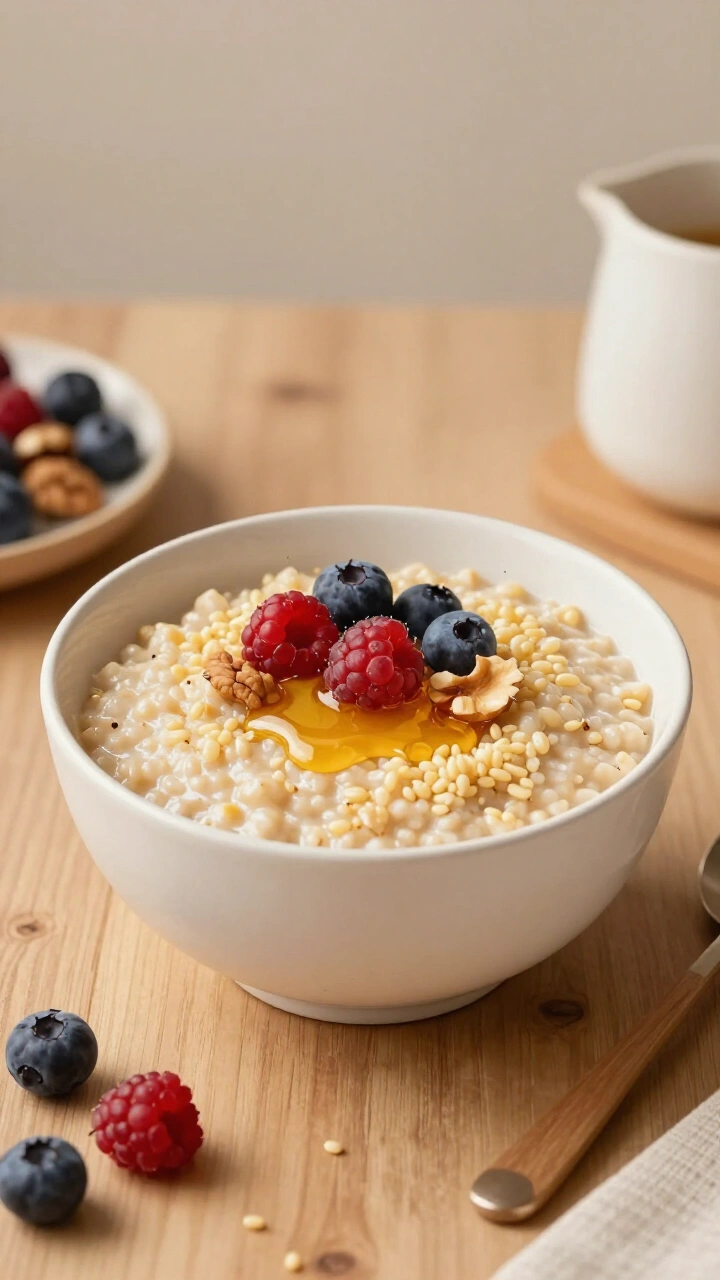
Step 1: Soak the Millet
Add 1 cup of millet to a bowl. Pour in 2 cups of water and 1 tablespoon of apple cider vinegar. Give it a good stir, cover the bowl, and leave it to soak for 8 hours (overnight works perfectly).
This step makes a real difference in texture and digestibility , don’t skip it.
Step 2: Rinse and Drain
After soaking, drain the millet and rinse it thoroughly under cold running water. You want to rinse away all that soaking liquid. The millet will look slightly swollen and maybe a little sticky , that’s totally normal.
Step 3: Cook the Millet
Transfer your rinsed millet into a saucepan. Add 1 cup of water and 1 cup of dairy-free milk. Stir everything together, then bring it to a gentle simmer over medium heat. Once it starts simmering, reduce the heat, cover the pan, and let it cook low and slow for about 15–20 minutes, stirring occasionally.
You’re looking for the millet to absorb most of the liquid and turn soft and thick.
Step 4: Blend for Creaminess
Here’s the step that transforms good porridge into great porridge. Once the millet has cooked down, add another ½ cup of dairy-free milk and use an immersion blender (or a regular blender , just be careful with hot liquid) to blend it to your desired consistency.
Want it ultra-smooth? Blend longer. Prefer some texture? Pulse it a few times and leave it slightly chunky. I go somewhere in the middle , mostly smooth with a little body left.
Step 5: Season and Sweeten
Stir in maple syrup to taste and ½ teaspoon of cinnamon powder. Give it a taste and adjust from there. The cinnamon adds warmth, and the maple syrup brings a gentle natural sweetness that pairs perfectly with the grain’s slightly nutty flavor.
Step 6: Top and Serve
Ladle the porridge into bowls and finish with fresh peach slices and your nuts of choice. The peach adds juicy brightness, and the nuts give you that satisfying crunch contrast. It looks beautiful and tastes even better.
Why This Recipe Works So Well
The Dairy-Free Milk Choice Matters
Not all dairy-free milks behave the same in porridge. Here’s a quick breakdown:
- Oat milk , creamy, neutral flavor, my personal favorite for porridge
- Coconut milk , rich and slightly sweet, adds a tropical note
- Almond milk , lighter, works well if you want a less heavy bowl
- Cashew milk , very creamy, great for a luxurious texture
I usually reach for oat milk because it blends into the porridge seamlessly without overpowering the millet’s natural flavor.
The Blending Step Is Non-Negotiable
Before I started blending my millet porridge, it had a slightly grainy texture that I just couldn’t get past. Blending , even briefly , completely transforms it into something velvety and restaurant-worthy. It takes 30 seconds and makes a massive difference.
Toppings Elevate the Whole Bowl
The peach and nut combo isn’t random , it’s strategic. Peaches bring acidity and sweetness that cut through the creamy richness of the porridge. Nuts add protein, healthy fats, and crunch, making the bowl more filling and texturally interesting. Together, they turn a simple grain bowl into something you’d genuinely be excited to eat every morning.
Millet Porridge vs. Oatmeal: An Honest Take
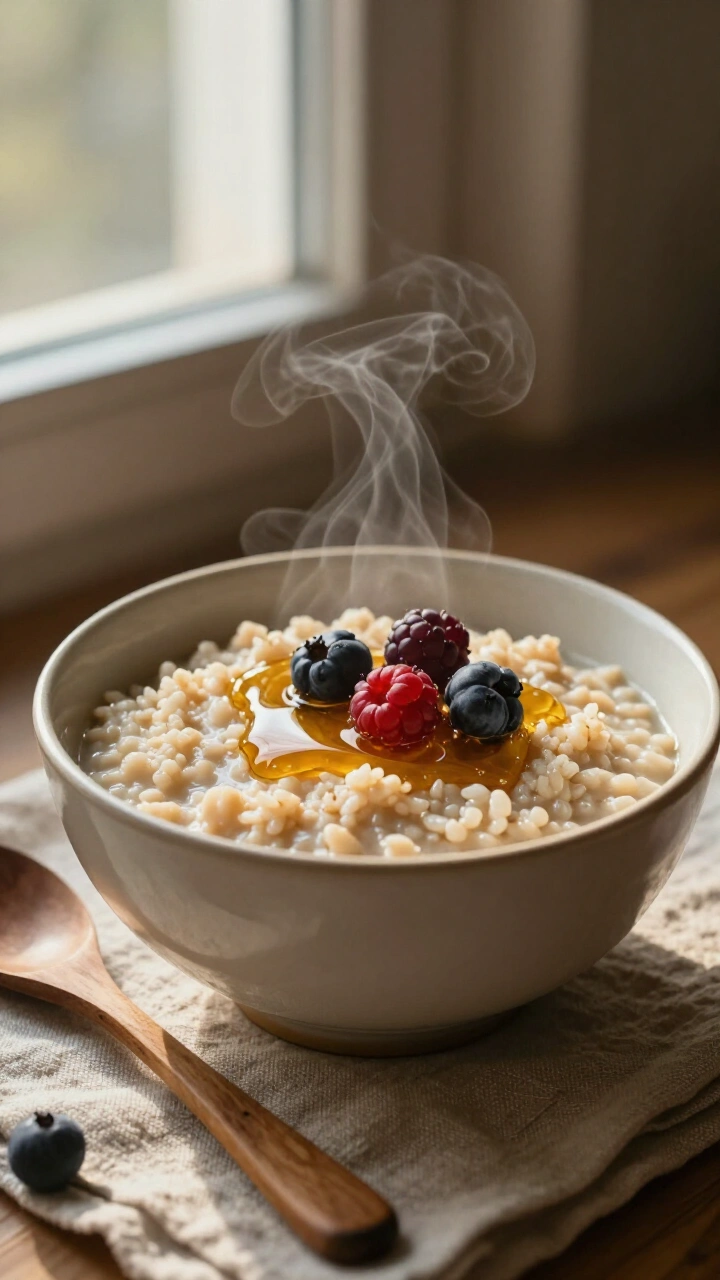
People always ask me how millet porridge compares to oatmeal, so let’s just address it directly.
| Millet Porridge | Oatmeal | |
|---|---|---|
| Gluten-free | Naturally | Only certified GF oats |
| Texture | Creamy, slightly nutty | Thick, chewy |
| Flavor | Mild, earthy | Neutral |
| Prep time | Longer (soaking needed) | Quick |
| Digestibility | High (when soaked) | Moderate |
Both are solid breakfast options. But if you deal with gluten sensitivity, want something a little different, or just feel like your oatmeal routine has gotten stale , millet porridge is 100% worth switching to, at least a few mornings a week.
Storing and Reheating Your Porridge
Made too much? No problem. Store leftover millet porridge in an airtight container in the fridge for up to 3 days. When you reheat it, the porridge will have thickened considerably , just add a splash of dairy-free milk and stir it over low heat until it loosens back up.
I actually like it slightly thicker the next day. It feels more substantial somehow.
Final Thoughts: Give Millet a Chance
Millet porridge is one of those recipes that sounds simple , because it is simple , but delivers way beyond expectations. The soaking step requires a little planning ahead, but the actual cooking time is minimal, and the result is a creamy, nourishing, naturally sweetened breakfast that genuinely keeps you going all morning.
Top it with those peachy slices and crunchy nuts, and you’ve got a bowl that looks as good as it tastes. Honestly, this might be the breakfast upgrade you didn’t know you were missing.
2
servings10
minutes8
hours20
minutes320
kcalIngredients
1 cup millet
2 cups water (for soaking)
1 tablespoon apple cider vinegar
1 cup water (for cooking)
1 cup dairy-free milk, such as oat milk or coconut milk
1/2 cup dairy-free milk, for blending
Maple syrup, to taste
1/2 teaspoon cinnamon powder
Fresh peach slices, for topping
Nuts of your choice, such as pecans or walnuts, for topping
Directions
- Add the millet to a bowl with 2 cups water and the apple cider vinegar. Stir, cover, and soak for 8 hours or overnight.
- Drain the millet and rinse it thoroughly under cold running water.
- Transfer the rinsed millet to a saucepan. Add 1 cup water and 1 cup dairy-free milk.
- Bring to a gentle simmer over medium heat, then reduce the heat, cover, and cook for 15 to 20 minutes, stirring occasionally, until the millet is soft and most of the liquid is absorbed.
- Add the remaining 1/2 cup dairy-free milk and blend with an immersion blender, or carefully in a regular blender, until creamy and mostly smooth.
- Stir in maple syrup and cinnamon powder to taste.
- Spoon into bowls and top with fresh peach slices and nuts.
Notes
- This porridge keeps well in the fridge for up to 3 days; reheat with a splash of milk to loosen it up.

About the author
Written by Arman
Hi, I'm Muhammad Arman, a healthy food expert who is passionate about helping you build a better life through real, nourishing food. I share simple, practical tips and clean recipes because I truly believe that eating well should feel good, not complicated.
Published April 15, 2026 Updated May 27, 2026