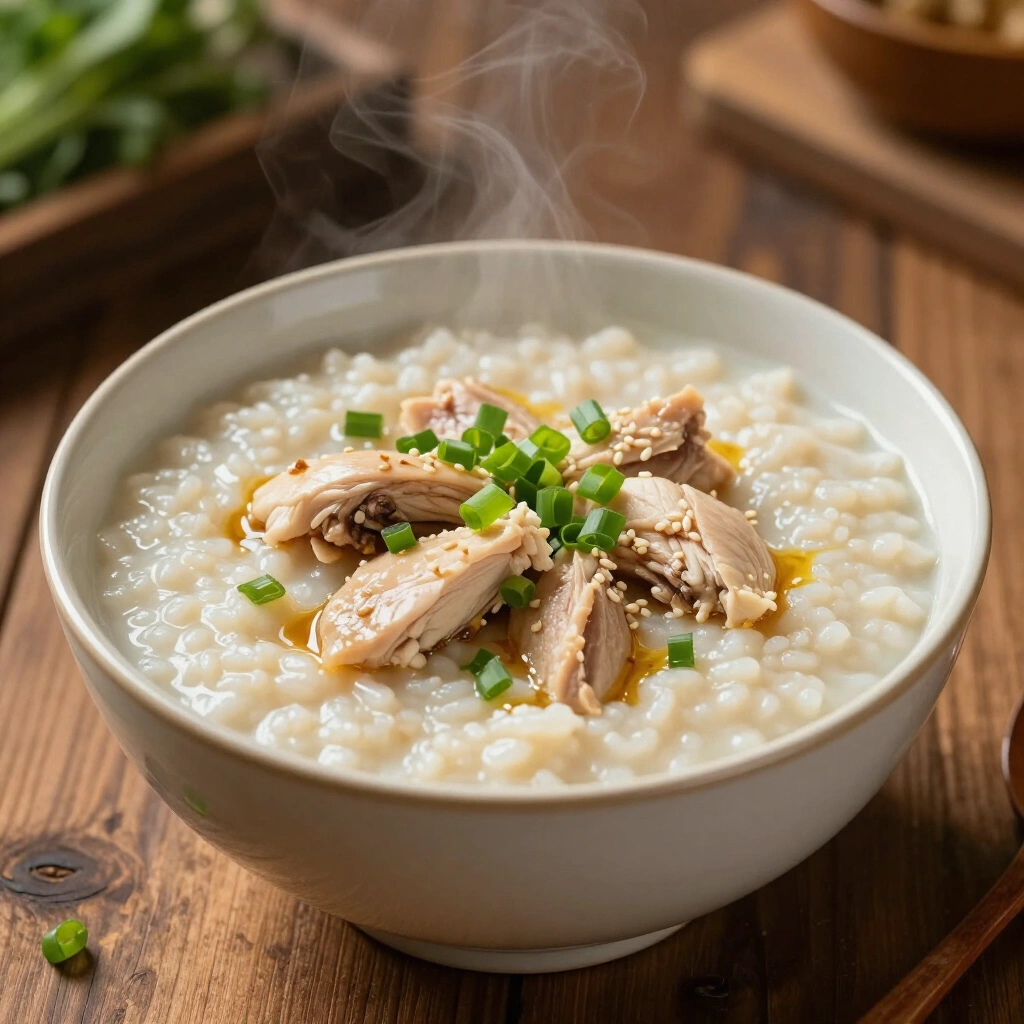

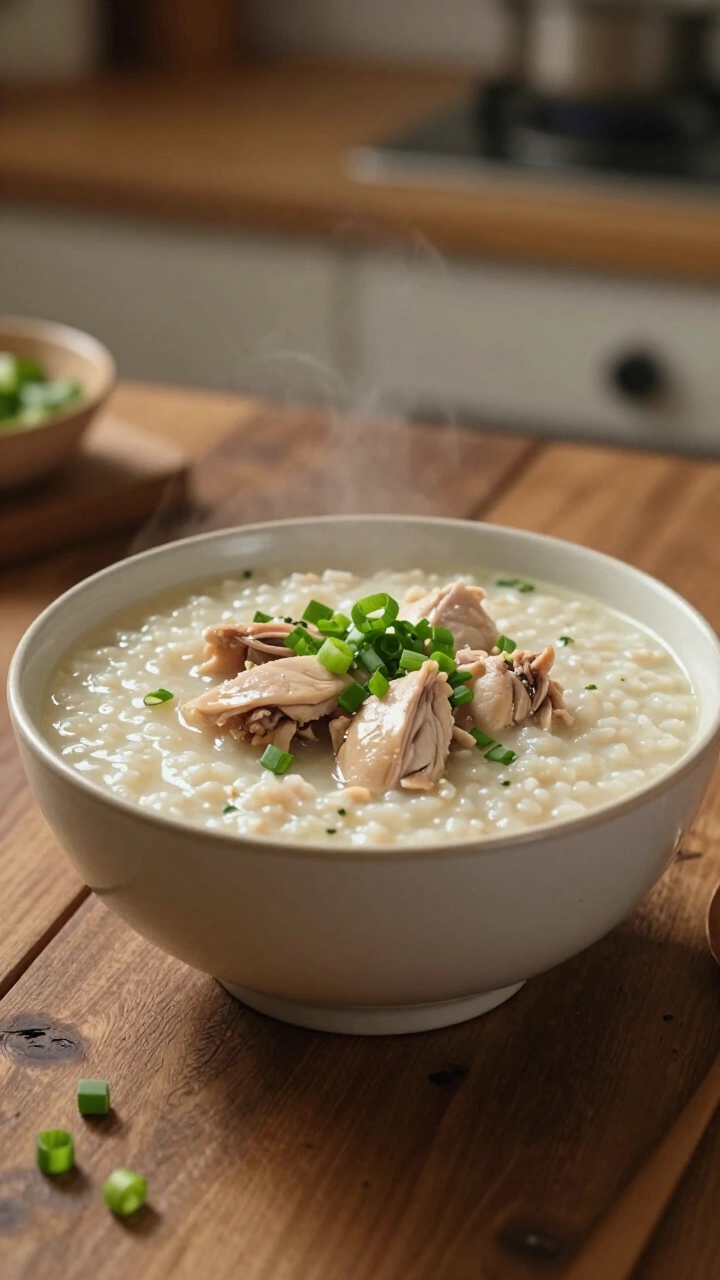
There’s something about a bowl of chicken porridge , also known as congee , that feels like a warm hand on your shoulder. Whether you’re under the weather, craving something deeply comforting, or just tired of sweet breakfasts, this dish delivers every single time. I made my first proper pot of chicken congee on a rainy Sunday afternoon, and honestly, it’s been a regular in my kitchen ever since.
What Is Chicken Porridge (Congee)?
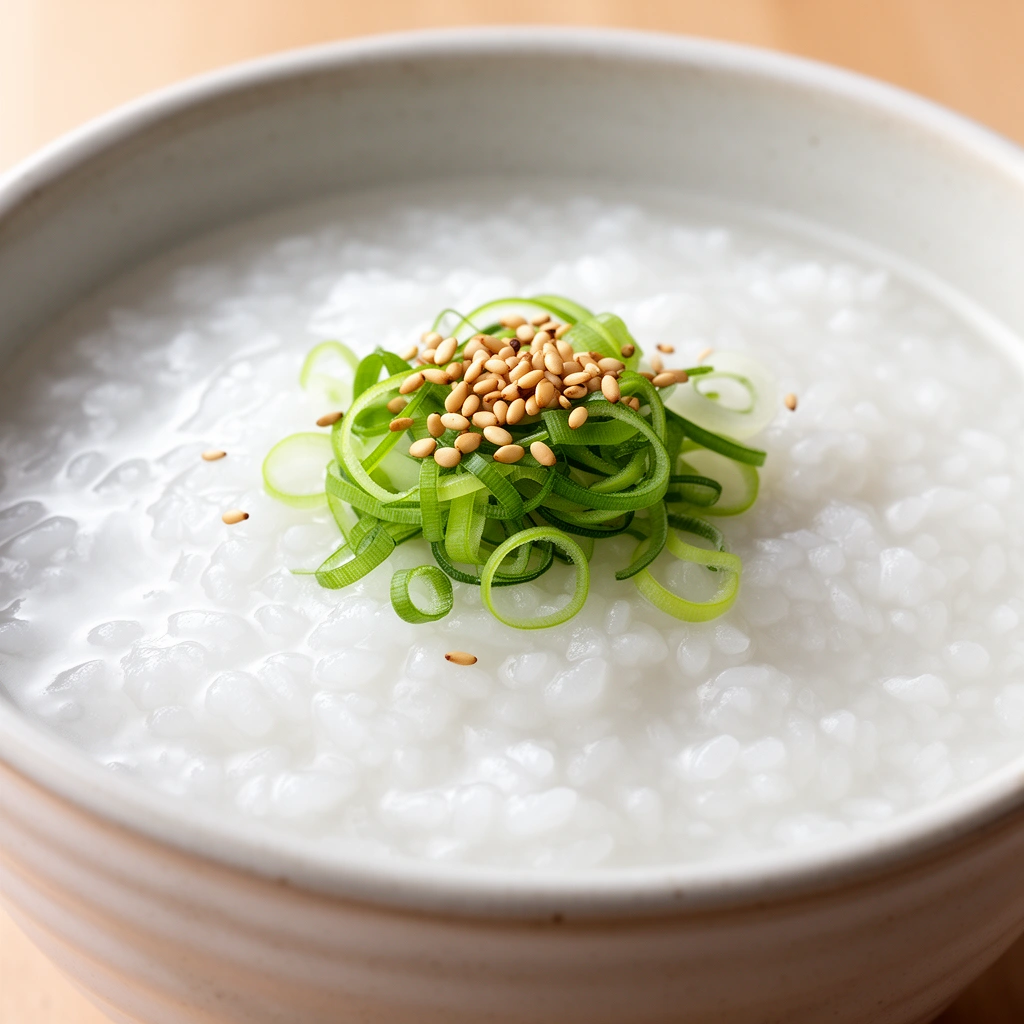
Congee is a rice porridge that features across Chinese, Japanese, Korean, and Southeast Asian cuisines. The basic idea is simple: cook rice in significantly more liquid than usual, low and slow, until the grains break down into a thick, creamy, almost velvety consistency.
The result tastes nothing like plain rice. The long cooking time transforms the grains completely, giving you a smooth, hearty base that absorbs whatever flavors you add. Chicken congee specifically builds its flavor profile around marinated chicken strips, ginger, green onion, and a touch of chicken bouillon , and the result is genuinely restaurant-quality when you follow the technique correctly.
IMO, congee is one of the most underrated comfort foods in existence. It’s filling without feeling heavy, and it comes together with ingredients most people already keep in their pantry.
Ingredients You Need
For the Marinated Chicken
- 4 oz skinless boneless chicken breast, cut into thin strips (no more than ¼ inch thick)
- ½ inch knob of fresh ginger, peeled and cut into very thin strips or minced
- ½ tablespoon oyster sauce
- 1 teaspoon Shaoxing rice wine
- ¼ teaspoon kosher salt
- 1 teaspoon cornstarch
- ½ teaspoon neutral cooking oil
For the Congee Base (Serves 2)
- ½ cup medium grain or short grain white rice
- 4 cups water or unsalted chicken broth
- 1 teaspoon neutral cooking oil
- ½ teaspoon chicken bouillon powder
- ¼ teaspoon salt (adjust to taste)
- 1 stalk green onion, thinly sliced (white and green parts separated)
Optional Toppings
- Roughly chopped cilantro
- Chinese chili oil
- Youtiao (Chinese crullers / fried dough sticks)
Every ingredient here serves a purpose. The cornstarch in the marinade keeps the chicken silky and tender as it cooks. The Shaoxing rice wine adds depth and that distinctive savory-sweet note you get from good Chinese cooking. And the separated green onion , white parts cooked in, green parts as garnish , is a small detail that makes a real difference in flavor layering.
How to Make Chicken Porridge: Step-by-Step
Step 1: Marinate the Chicken
Combine the chicken strips, ginger, oyster sauce, Shaoxing rice wine, and salt in a bowl and mix well. Add the cornstarch and mix again until fully coated. Finish with the oil and stir to combine. Set the bowl aside while you prepare the congee base.
Step 2: Wash the Rice
Add your ½ cup of medium grain or short grain rice to a bowl and rinse it 2 to 3 times with cold water until the water runs mostly clear. Drain it well before it goes into the pot. This step removes excess surface starch that would otherwise make the congee gluey rather than silky.
Step 3: Start the Congee
Add your 4 cups of water or unsalted chicken broth to a claypot or stainless steel pot and bring it to a full boil. Using chicken broth instead of water adds another layer of savory depth , if you have it on hand, use it. Once boiling, add the washed rice and a teaspoon of oil. Give everything a good stir, then cover the pot and bring it back to a boil.
Step 4: Simmer Low and Slow
Once the pot returns to a boil, reduce the heat to medium or medium-low to maintain a steady simmer. Stir the rice, making sure to scrape the bottom of the pot to prevent sticking. Keep the lid cracked , not fully closed , and let the congee cook for about 30 minutes until it thickens noticeably and the rice turns tender.
A word of warning: congee can bubble up and overflow, especially with the lid on. Keep the lid cracked and check on the pot regularly. Adjust the heat as needed to maintain a gentle simmer rather than a rolling boil.
Step 5: Finish with Chicken and Seasoning
After 30 minutes, your congee should look visibly thicker and creamy. If it still looks too loose, let it simmer for another 5–10 minutes. Give it a thorough stir, especially scraping the bottom.
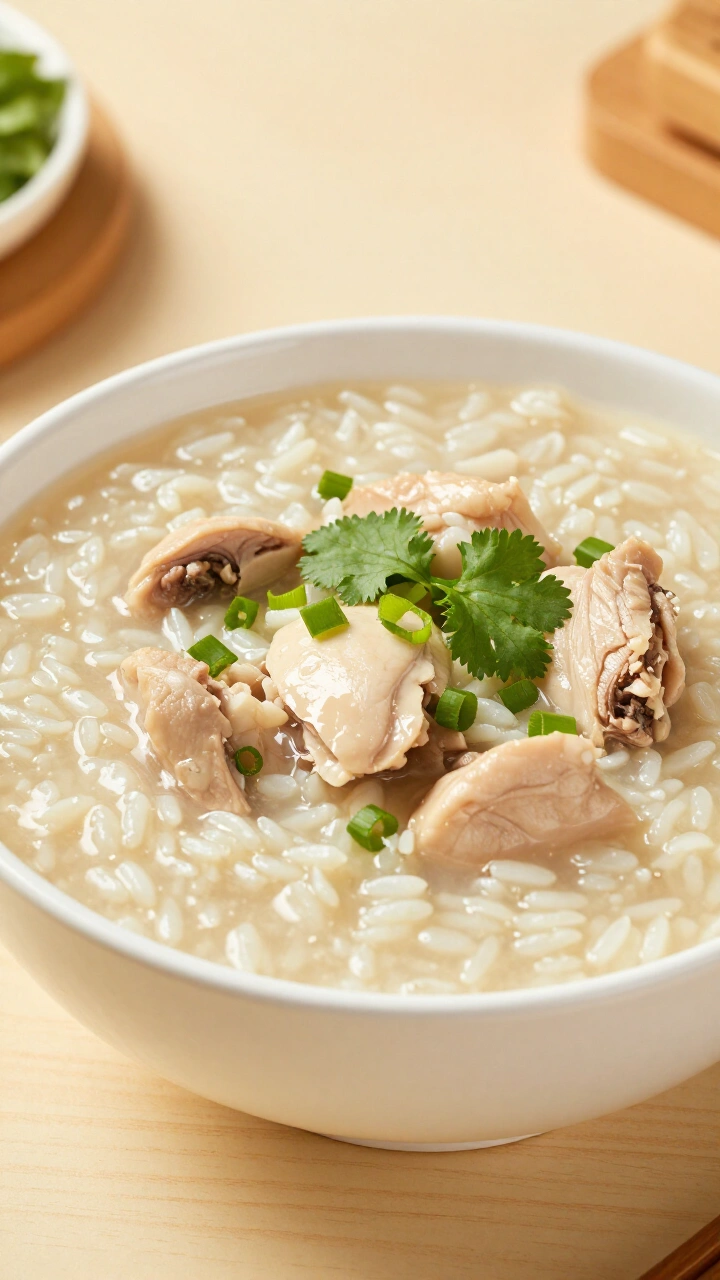
Add the white parts of the green onion and the marinated chicken strips directly into the congee. Stir vigorously and immediately to separate the chicken pieces , chopsticks work best here, but a fork does the job too. The goal is to break the strips apart before they cook together into one lump.
Season with chicken bouillon powder and salt, then let the congee simmer for another 2–3 minutes until the chicken cooks through completely.
Be careful when tasting at this stage. Congee holds heat like nobody’s business , it stays scorching hot even after you take it off the burner. Taste carefully and adjust seasoning if needed.
Claypot vs. Stainless Steel Pot: Does It Matter?
Short answer , both work. But there are real differences worth knowing.
| Claypot | Stainless Steel Pot | |
|---|---|---|
| Heat distribution | Even, gentle | Can have hot spots |
| Traditional flavor | Slightly earthy depth | Neutral |
| Practicality | Fragile, heavier | Easy to handle |
| Clean-up | More effort | Quick and simple |
| Best for | Authentic congee experience | Everyday cooking |
A claypot gives you a more traditional result , the porous material distributes heat gently and evenly, which helps the rice break down smoothly. That said, a good stainless steel pot makes equally delicious congee with zero fuss. Use whatever you have.
Water vs. Chicken Broth: Which Should You Use?
This is worth addressing directly because it genuinely affects the final flavor.
Water works and produces a clean, mild congee that lets the marinated chicken carry the flavor. Unsalted chicken broth builds a richer, more savory base from the very start , the rice absorbs all those flavors as it cooks down.
My personal preference? Use broth when you have it. The congee tastes noticeably more complex and satisfying. But if you’re using water, the chicken bouillon powder added at the end does a solid job of compensating. You won’t end up with a bad bowl either way.
Toppings That Take This Bowl Over the Top
The toppings for chicken congee aren’t just decorative , they add layers of texture and flavor that the smooth porridge base needs.
- Green onion (green parts) , fresh, sharp, and cuts through the richness
- Cilantro , bright herbal flavor that lifts the whole bowl
- Chinese chili oil , adds heat, smokiness, and a gorgeous red color swirled through the white congee
- Youtiao (Chinese crullers) , these fried dough sticks are the ultimate congee companion; you tear pieces off and dip them in, and the contrast of crispy-chewy against silky porridge is chef’s kiss
You don’t need all of these to have a great bowl. Even just green onion and a drizzle of chili oil transforms the presentation and flavor significantly. :/ (Past me used to skip the toppings entirely and missed out badly.)
Storing and Reheating Leftovers
Chicken congee stores beautifully. Transfer any leftovers into a sealed container and refrigerate for up to 3 days. The congee will thicken considerably in the fridge as the starch continues to absorb liquid.
When reheating, add a splash of water or broth and stir over medium-low heat until it loosens back to your preferred consistency. It comes together in about 5 minutes and tastes just as comforting the next day.
Make Chicken Congee This Weekend
Chicken porridge is one of those recipes that looks simple on paper but delivers layers of flavor and comfort that genuinely surprise people the first time they try it. The marinated chicken makes the bowl. The slow simmer makes the texture. And the toppings pull everything together into something that feels special.
2
servings15
minutes35
minutes320
kcalIngredients
4 oz skinless boneless chicken breast, cut into thin strips
1/2 inch knob fresh ginger, peeled and cut into thin strips or minced
1/2 tablespoon oyster sauce
1 teaspoon Shaoxing rice wine
1/4 teaspoon kosher salt
1 teaspoon cornstarch
1/2 teaspoon neutral cooking oil
1/2 cup medium grain or short grain white rice
4 cups water or unsalted chicken broth
1 teaspoon neutral cooking oil
1/2 teaspoon chicken bouillon powder
1/4 teaspoon salt, adjust to taste
1 stalk green onion, thinly sliced, white and green parts separated
Optional: chopped cilantro
Optional: Chinese chili oil
Optional: youtiao (Chinese crullers)
Directions
- In a bowl, combine the chicken strips, ginger, oyster sauce, Shaoxing rice wine, and salt. Mix well, then add the cornstarch and toss until coated. Finish with the oil and stir to combine. Set aside while you prepare the congee base.
- Rinse the rice 2 to 3 times with cold water until the water runs mostly clear, then drain well.
- Add the water or unsalted chicken broth to a pot and bring to a full boil. Add the rice and 1 teaspoon oil, stir well, then cover and bring back to a boil.
- Reduce the heat to medium or medium-low and simmer with the lid slightly cracked. Stir occasionally and scrape the bottom of the pot to prevent sticking. Cook for about 30 minutes, until the rice is tender and the congee thickens.
- Add the chicken mixture, chicken bouillon powder, salt, and the white parts of the green onion. Stir and simmer for 5 to 7 minutes, until the chicken is cooked through and the porridge is creamy.
- Ladle into bowls and top with the green parts of the green onion. Add cilantro, chili oil, or youtiao if desired.
Notes
- Congee thickens as it sits, so add a splash of hot water or broth when reheating to loosen it back up.

About the author
Written by Arman
Hi, I'm Muhammad Arman, a healthy food expert who is passionate about helping you build a better life through real, nourishing food. I share simple, practical tips and clean recipes because I truly believe that eating well should feel good, not complicated.
Published April 15, 2026 Updated May 27, 2026