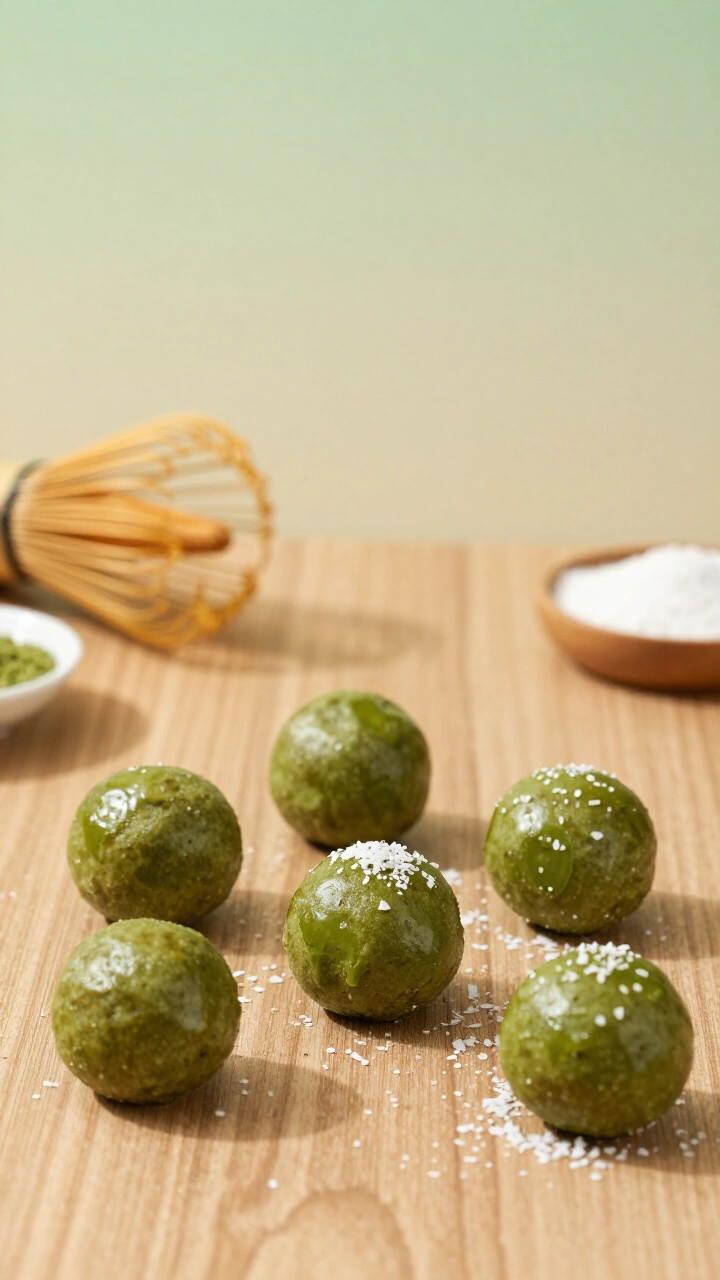
Matcha and protein in the same bite-sized snack? Yes, that’s exactly where we’re going. I stumbled onto this combination when I was trying to find something that tasted good, gave me a clean energy boost, and didn’t require me to turn on the oven. These matcha protein balls checked every box , and the vegan white chocolate drizzle on top makes them look far more impressive than the effort involved.
What Makes Matcha the Perfect Protein Ball Ingredient
Matcha gets a lot of attention for its flavor, but the real story is what it does for your body. High-quality matcha powder contains L-theanine, a compound that promotes calm focus without the jittery crash you get from coffee. Pair that with plant-based protein and you’ve got a snack that supports both your energy levels and your training.
The Full Recipe: Matcha Protein Balls with Vegan White Chocolate
Ingredients (Makes 9–10 Balls)
- 85g desiccated coconut
- 55g vegan protein powder
- 6g matcha powder
- 100g coconut cream
- 1–2 tsp coconut oil (only if the dough needs loosening)
- 30g vegan white chocolate (for the topping)
Every ingredient here pulls double duty. The desiccated coconut provides structure, fat, and a subtle sweetness. The coconut cream binds everything while keeping the balls moist. The vegan protein powder adds the macros. And the matcha ties the whole flavor profile together with that distinctive earthy note.
How to Make Them
1. Combine the desiccated coconut, vegan protein powder, and matcha powder in a mixing bowl. Stir the dry ingredients together first so the matcha distributes evenly before you add the wet ingredients.
2. Add the coconut cream and mix until a smooth, firm dough forms. If the dough feels stiff or crumbly, add coconut oil one teaspoon at a time until it comes together cleanly.
3. Roll into balls using about a tablespoon of dough per ball. Press firmly as you roll , this dough holds its shape well when you apply even pressure.
4. Melt the vegan white chocolate in a small bowl using 20-second microwave intervals, stirring between each. Drizzle over the balls using a spoon or a piping bag for cleaner lines.
5. Let them set at room temperature for 10 minutes, or pop them in the fridge for 5 minutes to speed things up.
That’s genuinely the whole process. No baking, no food processor required, minimal cleanup.
Breaking Down the Ingredients
Desiccated Coconut: Structure and Flavour
Desiccated coconut does a lot of heavy lifting in this recipe. It absorbs moisture from the coconut cream, which helps the dough firm up properly. It also adds a mild sweetness and a slightly chewy texture that makes these balls feel more satisfying than a protein ball built purely on oats or nuts.
Fine desiccated coconut works better than coarse-shredded here. The finer texture creates a smoother dough that rolls cleanly and holds together without crumbling when you bite in.
Vegan Protein Powder: Choosing the Right One
Your choice of vegan protein powder shapes the flavor and texture more than you might expect. Here’s how the common options compare:
- Pea protein , mild flavor, smooth texture, blends well with matcha
- Brown rice protein , slightly grainy texture, works but can affect the finish
- Hemp protein , earthy flavor that can compete with the matcha; use sparingly
- Blended vegan protein (pea + rice) , usually the best option for texture and neutral taste
Avoid anything with an overpowering artificial flavor. Vanilla-flavored vegan protein works well here. Strongly flavored options like salted caramel or chocolate fight with the matcha rather than complementing it.
Coconut Cream vs. Coconut Milk
Coconut cream is the right call, not coconut milk. Coconut cream has a higher fat content, which creates a richer, more cohesive dough. Coconut milk adds too much water and makes the dough sticky and difficult to roll. If you only have coconut milk on hand, use the thick cream that settles at the top of a chilled can.
Vegan White Chocolate: The Finishing Touch
The vegan white chocolate drizzle isn’t just decorative it adds a creamy sweetness that rounds out the earthy bitterness of the matcha beautifully. Most supermarkets now stock vegan white chocolate, or you can find it easily online.
FYI if you can’t find vegan white chocolate, a drizzle of melted coconut butter with a tiny pinch of powdered sugar creates a similar effect. Not identical, but close enough.
Nutrition Per Ball (Approximate)
Based on 10 balls per batch:
- Calories: 115–130
- Protein: 5–7g
- Carbohydrates: 6–8g
- Fat: 8–10g
- Sugar: 3–4g (mostly from the white chocolate drizzle)
The higher fat content here comes from the coconut ingredients, and these are primarily medium-chain triglycerides (MCTs) a fat source your body processes more efficiently than most. This makes the fat content genuinely useful rather than just calorically dense.
Troubleshooting Common Issues

Dough Won’t Come Together
If your dough crumbles and refuses to hold its shape, the coconut cream probably wasn’t enough to hydrate the dry ingredients fully. Add coconut oil one teaspoon at a time and mix after each addition. The dough should hold together when you squeeze a small amount between your fingers.
Balls Are Too Sticky to Roll
This happens when the coconut cream is warm or the room temperature is high. Refrigerate the dough for 20–30 minutes before rolling. Cold dough behaves much better and gives you cleaner, rounder balls.
Matcha Color Looks Dull
A grey-green color usually signals lower-quality matcha or matcha that’s past its best. Store your matcha in an airtight container away from light and heat , exposure degrades the chlorophyll and L-theanine content along with the color. Fresh, quality matcha stays vibrantly green.
Storing Your Matcha Protein Balls
These store really well, which makes them perfect for batch prepping at the start of the week.
- Refrigerator: Store in an airtight container for up to 7 days. The white chocolate sets firm in the fridge, which makes them easy to stack.
- Freezer: Freeze on a flat tray first until the chocolate sets completely, then transfer to a freezer bag. They keep for up to 2 months and thaw in about 15 minutes.
- Room temperature: Fine for up to 4 hours ideal for packing in a lunch box or gym bag.
One practical tip if you plan to freeze them, drizzle the white chocolate after thawing rather than before freezing. The drizzle looks much cleaner on a freshly thawed ball than on one that’s been frozen and defrosted.
How These Compare to Other No-Bake Protein Balls
| Factor | Matcha Protein Balls | Peanut Butter Oat Balls | Chocolate Protein Balls |
|---|---|---|---|
| Caffeine content | Yes (from matcha) | None | Minimal (from cocoa) |
| L-theanine | Yes | No | No |
| Dairy-free | Yes | Depends on protein powder | Depends |
| Unique flavor | High | Moderate | Moderate |
| Visual appeal | Very high | Low-medium | Medium |
The matcha version genuinely stands out from the usual peanut butter protein ball crowd. The green color, the subtle earthy flavor, and the white chocolate contrast make these a snack worth showing off not just eating quietly at your desk
These vegan matcha protein balls deliver on every front , flavor, nutrition, ease of prep, and visual appeal. The combination of desiccated coconut, coconut cream, quality matcha, and vegan white chocolate creates something that tastes genuinely indulgent while still earning its place in a balanced diet.
10
servings15
minutes10
minutes120
kcalIngredients
85g desiccated coconut
55g vegan protein powder
6g matcha powder
100g coconut cream
1–2 tsp coconut oil (only if needed to loosen the dough)
30g vegan white chocolate (for the topping)
Directions
- Combine the desiccated coconut, vegan protein powder, and matcha powder in a mixing bowl and stir well to distribute the matcha evenly.
- Add the coconut cream and mix until a smooth, firm dough forms. If the mixture is too stiff or crumbly, add coconut oil one teaspoon at a time until it holds together.
- Roll the dough into 9–10 balls, using about 1 tablespoon of mixture per ball and pressing firmly as you shape them.
- Melt the vegan white chocolate in 20-second microwave intervals, stirring between each interval, until smooth.
- Drizzle the melted white chocolate over the balls using a spoon or piping bag.
- Let the balls set at room temperature for about 10 minutes, or refrigerate for 5 minutes to speed up the setting.
Notes
- Store in the fridge in an airtight container for up to 5 days; let them sit at room temperature for a few minutes before eating for the best texture.

About the author
Written by Arman
Hi, I'm Muhammad Arman, a healthy food expert who is passionate about helping you build a better life through real, nourishing food. I share simple, practical tips and clean recipes because I truly believe that eating well should feel good, not complicated.
Published April 17, 2026 Updated June 1, 2026