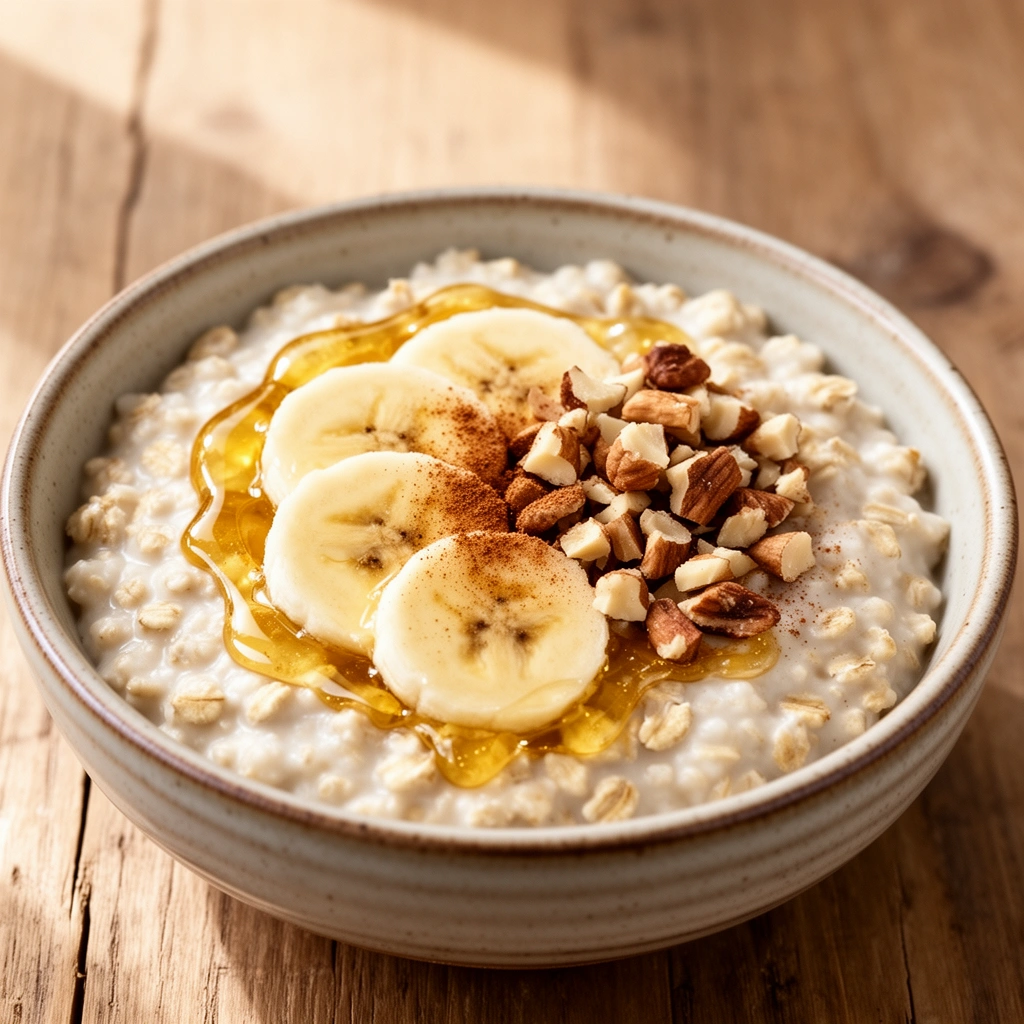
Most high-protein breakfasts are either expensive, time-consuming, or taste like something you’d rather skip. This easy protein porridge is none of those things. It hits 500 calories, 33g of protein, 71g of carbs, and 8g of fibre all from a bowl you can put together and cook in under 15 minutes.
The Full Nutrition Breakdown
Before we get into the recipe, let’s talk numbers , because this bowl genuinely delivers:
| Nutrient | Amount |
|---|---|
| Calories | 500 kcal |
| Protein | 33g |
| Carbohydrates | 71g |
| Fat | 12g |
| Fibre | 8g |
That protein count comes primarily from the 200g of Greek yogurt added as a topping after cooking , not from protein powder. It’s a clean, whole-food approach to hitting your morning protein target without the chalky aftertaste that comes with powder-heavy recipes.
The carb count might look high at first glance, but oats provide slow-releasing complex carbohydrates that give you sustained energy rather than a spike and crash. Combined with the fibre and protein, this bowl keeps you genuinely full for hours.
Ingredients (Serves 1)
Here’s everything you need:
For the porridge:
- 60g rolled oats
- 200ml semi-skimmed milk (2%)
- 200ml water
For the toppings:
- 200g non-fat Greek yogurt (0%) , the main protein source
- 15g low-sugar granola , for crunch
- A drizzle of honey , for sweetness
- A pinch of cinnamon , for warmth and flavour
That’s it. Eight ingredients, most of which you probably already have. The simplicity is the point , this isn’t a recipe that requires a grocery run every time you want to make it.
How to Make Easy Protein Porridge

Step 1: Cook the Oats
Add the 60g oats, 200ml milk, and 200ml water to a saucepan. The mix of milk and water gives you a creamy result without the heaviness of cooking in pure milk. It’s the ratio that most professional porridge recipes use, and IMO it makes a noticeable difference compared to water alone.
Cook over medium heat for 5–10 minutes, stirring regularly. The oats will absorb the liquid and thicken gradually. Don’t rush it with high heat , slow and steady gives you the creamy, silky texture that makes porridge worth eating.
Step 2: Watch the Consistency
At around 5 minutes, check the consistency. If you want a looser, more pourable porridge, take it off the heat now. If you prefer something thicker and more substantial, give it another 2–3 minutes, stirring continuously.
Remember: porridge thickens further as it sits in the bowl. Cook it slightly looser than you want your finished bowl to be.
Step 3: Build the Toppings
Pour the cooked oats into your bowl, then layer the toppings:
- Spoon the Greek yogurt on top , either as a thick dollop in the center or spread across the bowl
- Scatter the granola over the yogurt , add it last so it keeps its crunch
- Drizzle honey lightly across the whole bowl
- Dust with cinnamon , a light, even sprinkle is all you need
The order matters here. Adding granola before the yogurt makes it soggy. Adding honey before cinnamon means the cinnamon clumps instead of distributing evenly. Small details, real difference.
The Role of Each Topping
Greek Yogurt
The protein anchor of the whole bowl. Use 0% fat (non-fat) Greek yogurt to keep the fat content in check , the recipe already hits 12g of fat from the oats and milk, and the yogurt doesn’t need to add to that. Non-fat Greek yogurt is thick, creamy, and protein-dense without being heavy.
Low-Sugar Granola
Texture is one of the biggest complaints people have about porridge , it can feel too soft and one-dimensional. Granola fixes this completely. Fifteen grams is enough to add crunch to every few spoonfuls without dominating the bowl.
Honey
A light drizzle does two things: it adds natural sweetness that ties the yogurt and oats together, and it creates a visual contrast on top of the bowl that makes the whole thing look considerably more appealing. You don’t need much , start with half a teaspoon and add more if needed.
Cinnamon
Cinnamon brings warmth and spice that makes the bowl taste more complex than its ingredient list suggests. It also pairs naturally with honey, oats, and yogurt , the combination has been working for centuries for good reason. Use a pinch rather than a heavy shake; the goal is background warmth, not a cinnamon-forward bowl.
Protein Porridge vs. Standard Porridge: What Changes?
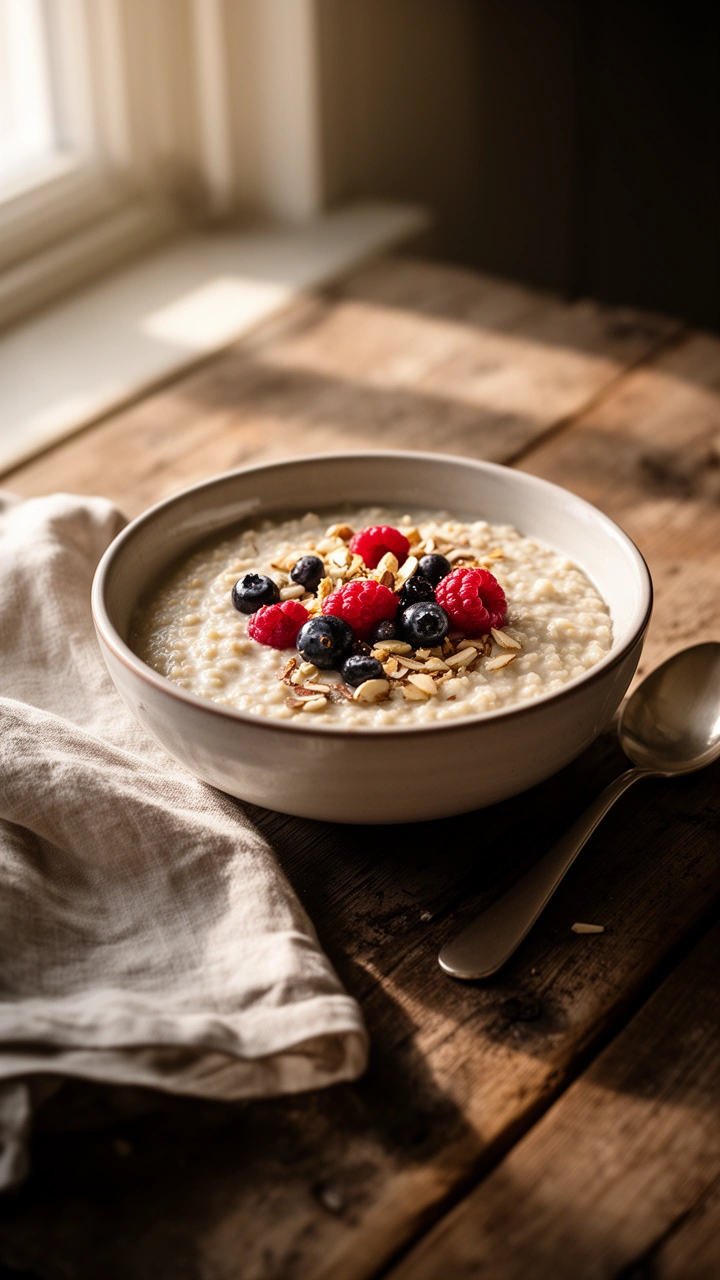
A regular bowl of oats with milk clocks in at roughly 300 calories and 10–12g protein. That’s a decent breakfast, but for anyone training regularly or trying to stay full through a long morning, it often falls short.
This high-protein porridge hits 33g of protein from the same base with one key addition: the Greek yogurt topping. You don’t need to overhaul the recipe, buy protein powders, or weigh out complicated ingredients. You just add yogurt on top instead of eating it on the side.
| Standard Porridge | This Protein Porridge | |
|---|---|---|
| Calories | ~300 kcal | 500 kcal |
| Protein | ~10–12g | 33g |
| Satiety | 2–3 hours | 4–5 hours |
| Prep time | 5–10 min | 10–15 min |
| Cost per serving | Low | Low |
The extra 5 minutes and one additional ingredient produce a meaningfully better outcome. For anyone with fitness or body composition goals, that trade-off makes complete sense.
Making It Work for Different Goals
If You Want More Calories
Add a tablespoon of nut butter (peanut or almond) to the oats while they cook. That adds roughly 90–100 calories and another 4g of protein. You can also use full-fat Greek yogurt for a richer topping.
If You Want Fewer Calories
Reduce the oats to 45g and the yogurt to 150g. You’ll land closer to 380 calories while still hitting around 25g of protein , a solid result for a lighter day.
If You Want More Fibre
Add a tablespoon of chia seeds or ground flaxseed to the oats during cooking. Either adds 3–4g of fibre and blends seamlessly into the texture of the porridge.
Tips for Getting It Right Every Time
Stir the oats frequently during cooking. The milk solids can catch on the bottom of the pan if you leave it unattended. Medium heat and regular stirring prevent sticking and produce a more evenly cooked result.
Add the yogurt cold, straight from the fridge. The temperature contrast between hot oats and cold yogurt is one of the best things about this bowl. Don’t warm it up first.
Add granola at the very last second. The moment granola hits warm porridge or yogurt it starts to lose its crunch. Add it right before you start eating.
Taste before adding honey. The Greek yogurt has a slight tartness that might be enough sweetness for you without any additions. Taste first, drizzle second.
Make This Bowl Tomorrow Morning
Easy protein porridge delivers 33g of protein, sustained energy from complex carbs, and 8g of fibre in a bowl that takes 15 minutes and costs very little per serving. It’s one of those recipes that performs well on every front , nutritionally, practically, and taste-wise.
Sixty grams of oats, a mix of milk and water, five to ten minutes on the stove, and a yogurt-granola-honey-cinnamon topping situation on top. That’s the whole recipe. Try it tomorrow morning and see how long it actually keeps you full. You might be surprised.
1
servings5
minutes10
minutes500
kcalIngredients
60g rolled oats
200ml semi-skimmed milk (2%)
200ml water
200g non-fat Greek yogurt (0%)
15g low-sugar granola
A drizzle of honey
A pinch of cinnamon
Directions
- Add the rolled oats, milk, and water to a saucepan.
- Cook over medium heat for 5–10 minutes, stirring regularly, until the oats are thick and creamy.
- Check the consistency around 5 minutes and cook a little longer if you prefer thicker porridge.
- Pour the porridge into a bowl.
- Spoon the Greek yogurt on top.
- Scatter the granola over the yogurt.
- Drizzle lightly with honey.
- Finish with a pinch of cinnamon.
Notes
- Add the granola last so it stays crunchy; if reheating, top with yogurt and granola after warming the oats.

About the author
Written by Arman
Hi, I'm Muhammad Arman, a healthy food expert who is passionate about helping you build a better life through real, nourishing food. I share simple, practical tips and clean recipes because I truly believe that eating well should feel good, not complicated.
Published April 24, 2026 Updated May 27, 2026