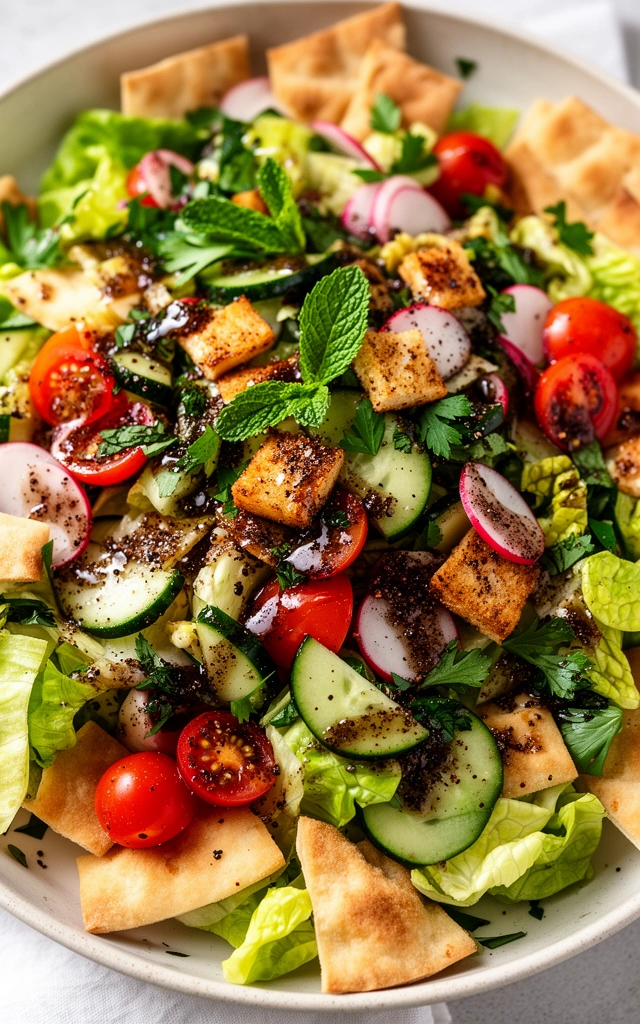
Ever had that moment where you’re munching on a fresh, crispy Fattoush salad, and suddenly, the dressing makes the whole experience? Yeah, the right Fattoush salad dressing can elevate your salad from “meh” to “OMG, give me more!” It’s like that secret ingredient that turns a simple veggie mix into a Middle Eastern flavor explosion. If you’re craving that tangy, zesty punch but don’t want to buy some pre-made stuff that tastes like it’s been sitting on a shelf for a decade, stick around. I’ve got you covered with a homemade recipe that’s easy, fresh, and totally customizable.
Why Make Your Own Fattoush Salad Dressing?
Let’s be honest, store-bought dressings are convenient, but they often lack the zing and authenticity of fresh, homemade versions. Plus, you control the ingredients. No weird preservatives, fake flavors, or excess sugar. I personally love whipping up my own because it’s so quick and it tastes so much better. FYI, making your own dressing also means you can tweak it to perfectly match your taste buds, whether you like it more tangy, garlicky, or herby.
What Is Fattoush Salad Dressing?
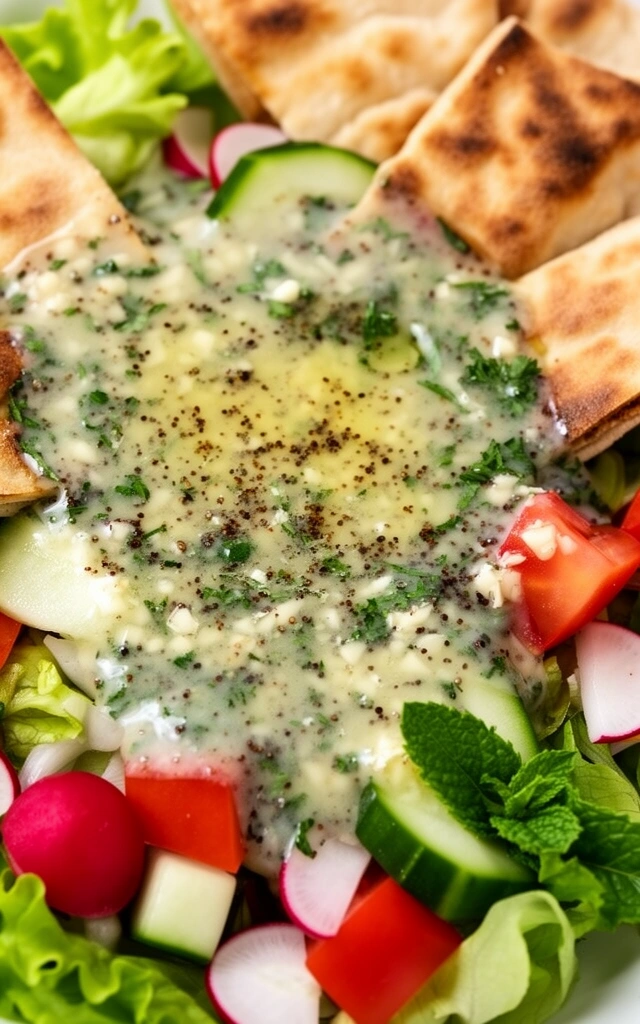
Before I share the recipe, let’s talk about what makes Fattoush salad dressing special. It’s a vibrant, tangy mixture that combines lemon juice, olive oil, garlic, herbs, and a hint of sumac. The sumac is what gives it that beautiful, slightly sour flavor that’s hard to replicate with vinegar alone. The dressing’s bright and fresh, perfectly complementing crispy pita chips and fresh vegetables.
Ingredients for Fattoush Salad Dressing
Here’s what you’ll need for a batch that serves about 4-6 people:
1/4 cup (60 ml) fresh lemon juice
Freshly squeezed is non-negotiable here. It’s the star of the show, IMO.1/3 cup (80 ml) extra virgin olive oil
Use good quality olive oil, trust me, it makes a difference.2 cloves garlic, minced
For that punch of flavor. Want it milder? Use one clove.1 teaspoon sumac
The magic ingredient. It’s tart and citrusy.1 teaspoon honey or maple syrup
To balance the acidity. Skip it if you prefer a more tart dressing.1 teaspoon Dijon mustard
Adds a little creaminess and helps emulsify.1/2 teaspoon salt
Adjust to taste.1/4 teaspoon black pepper
Freshly ground, please.Optional: pinch of cayenne or red pepper flakes
For a spicy kick if you’re into that.
How to Make Fattoush Salad Dressing
Alright, now for the fun part, putting this together.
Step 1: Juice the Lemon
Start by squeezing fresh lemon juice into a small bowl or jar. FYI, avoid bottled lemon juice because it lacks the bright, fresh flavor.
Step 2: Whisk in the Garlic and Honey
Add the minced garlic and the teaspoon of honey or maple syrup. Whisk until the honey dissolves completely. This helps to mellow out the garlic a bit and balances the acidity.
Step 3: Add the Spices
Stir in the sumac, salt, black pepper, and optional red pepper flakes. These ingredients give the dressing its signature flavor profile.
Step 4: Emulsify with Olive Oil
Slowly pour in the olive oil while whisking continuously. This creates a nice, creamy emulsion that coats your salad perfectly.
Step 5: Taste and Adjust
Give it a taste. Want it more tangy? Add a squeeze of lemon. Need more richness? Drizzle in a little more olive oil. Adjust salt and pepper as needed.
And voila! Your homemade Fattoush salad dressing is ready to party.
Tips for the Perfect Fattoush Salad Dressing
- Use fresh ingredients , especially lemon juice and garlic. They make a world of difference.
- Emulsify well , whisk vigorously or shake in a jar with a tight lid. It helps the oil and lemon combine beautifully.
- Customize flavors , if you love herbs, add chopped parsley or mint for extra freshness.
- Make it ahead , the dressing can sit in the fridge for up to 3 days. Just give it a good shake before using.
How to Store Fattoush Salad Dressing
Storing is super simple. Keep it in an airtight jar or container in the fridge. The olive oil might solidify a bit when cold, but don’t worry, that’s normal. Just let it sit at room temperature for a few minutes or give it a quick shake before pouring over your salad.
Pro tip: label the jar with the date. I’ve forgotten about dressings in the back of the fridge before and ended up with a science experiment. Not fun.
How to Use Fattoush Salad Dressing
Pour it over your chopped romaine, cucumbers, tomatoes, radishes, and, of course, those crispy pita chips. Toss gently so everything gets coated but nothing gets soggy. The dressing pairs beautifully with grilled chicken or chickpeas if you’re feeling extra protein.
Why This Homemade Fattoush Dressing Wins
- Fresh and flavorful , no artificial stuff.
- Customizable , add more garlic, herbs, or spice.
- Easy to make , all in under 5 minutes.
- Healthy , packed with healthy fats and vitamin C from lemon.
Final Thoughts
Once you make this dressing, I promise you’ll never want store-bought again. It’s bright, tangy, and full of authentic Middle Eastern flair. Plus, it’s a breeze to whip up whenever your salad cravings hit. So next time you’re prepping a Fattoush, skip the bottled stuff and go fresh, your taste buds will thank you.
Now, grab those ingredients and give this recipe a shot. Trust me, once you do, salad will never be boring again. Happy dressing making! 😊
P.S. If you want to take your Fattoush to the next level, sprinkle some sumac on top of your salad after tossing for an extra punch of flavor. Or toss in some chopped fresh herbs, parsley or mint work beautifully. Happy eating!
10
minutes20
minutes160
kcalIngredients
1/4 cup fresh lemon juice
1/3 cup extra virgin olive oil
2 cloves garlic, minced
1 teaspoon sumac
1 teaspoon honey or maple syrup
1 teaspoon Dijon mustard
1/2 teaspoon salt
1/4 teaspoon black pepper
Optional: pinch of cayenne or red pepper flakes
Directions
- Juice the lemon and add the fresh lemon juice to a small bowl or jar.
- Whisk in the minced garlic and honey or maple syrup until the sweetener dissolves.
- Stir in the sumac, salt, black pepper, and optional cayenne or red pepper flakes.
- Slowly pour in the olive oil while whisking continuously until the dressing emulsifies.
- Taste and adjust with more lemon juice, olive oil, salt, or pepper as needed.
- Use immediately over Fattoush salad, or refrigerate in an airtight container and shake well before serving.
Notes
- Store in the fridge for up to 3 days; let it sit at room temperature briefly or shake well if the olive oil thickens.

About the author
Written by Arman
Hi, I'm Muhammad Arman, a healthy food expert who is passionate about helping you build a better life through real, nourishing food. I share simple, practical tips and clean recipes because I truly believe that eating well should feel good, not complicated.
Published May 13, 2026 Updated June 1, 2026