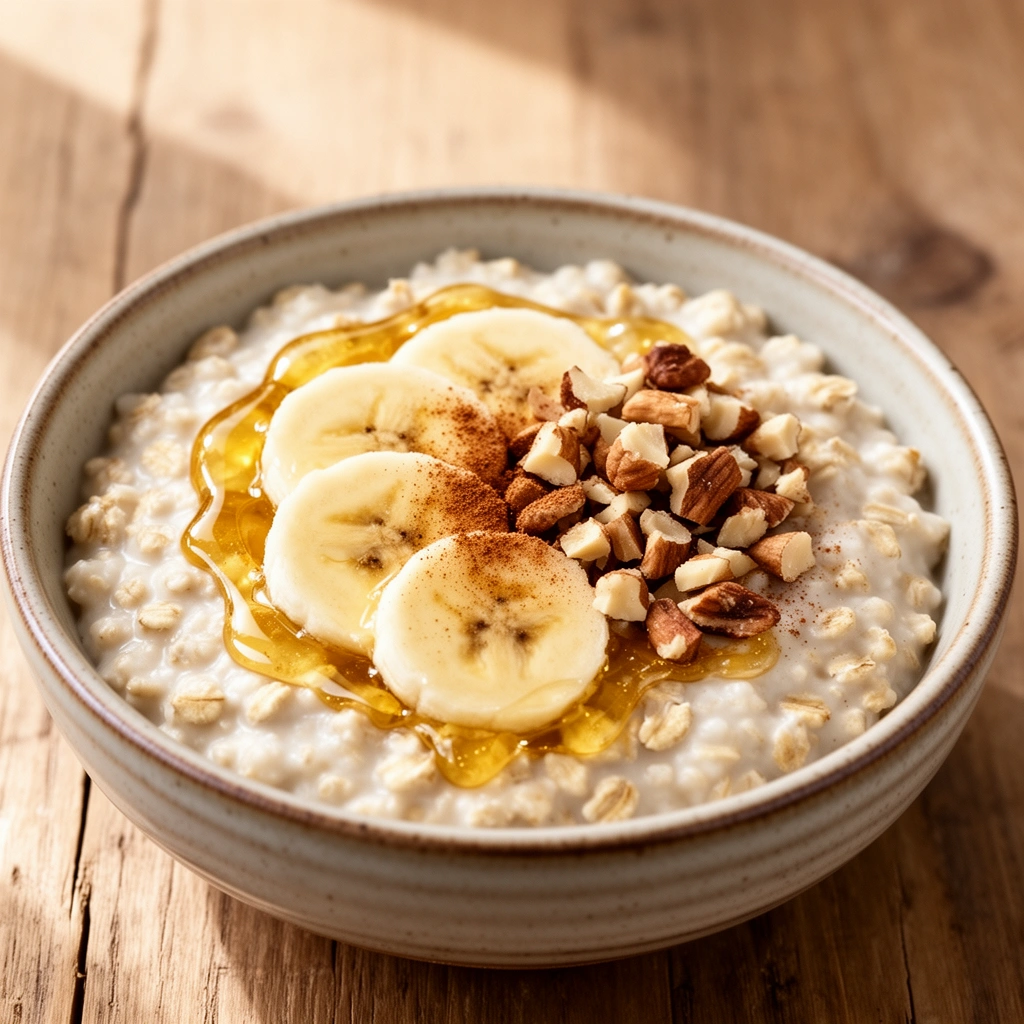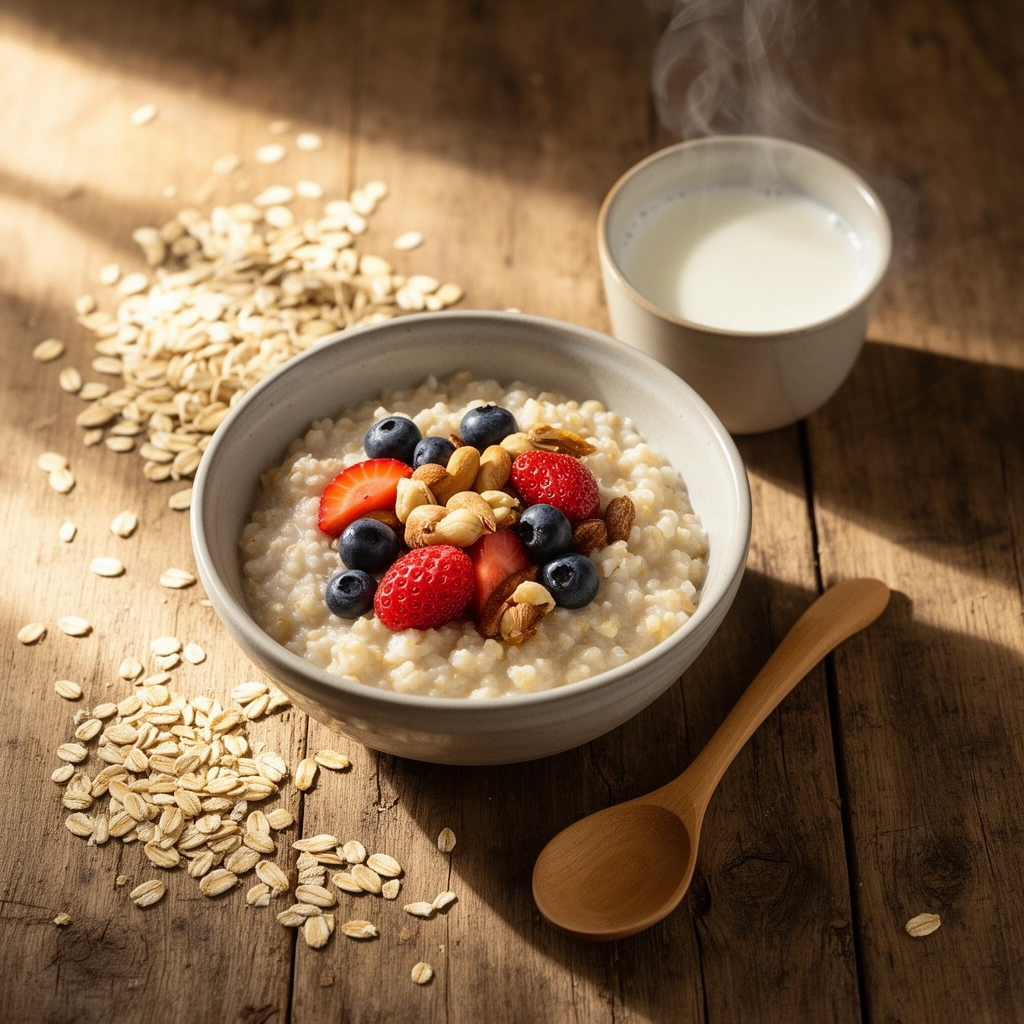

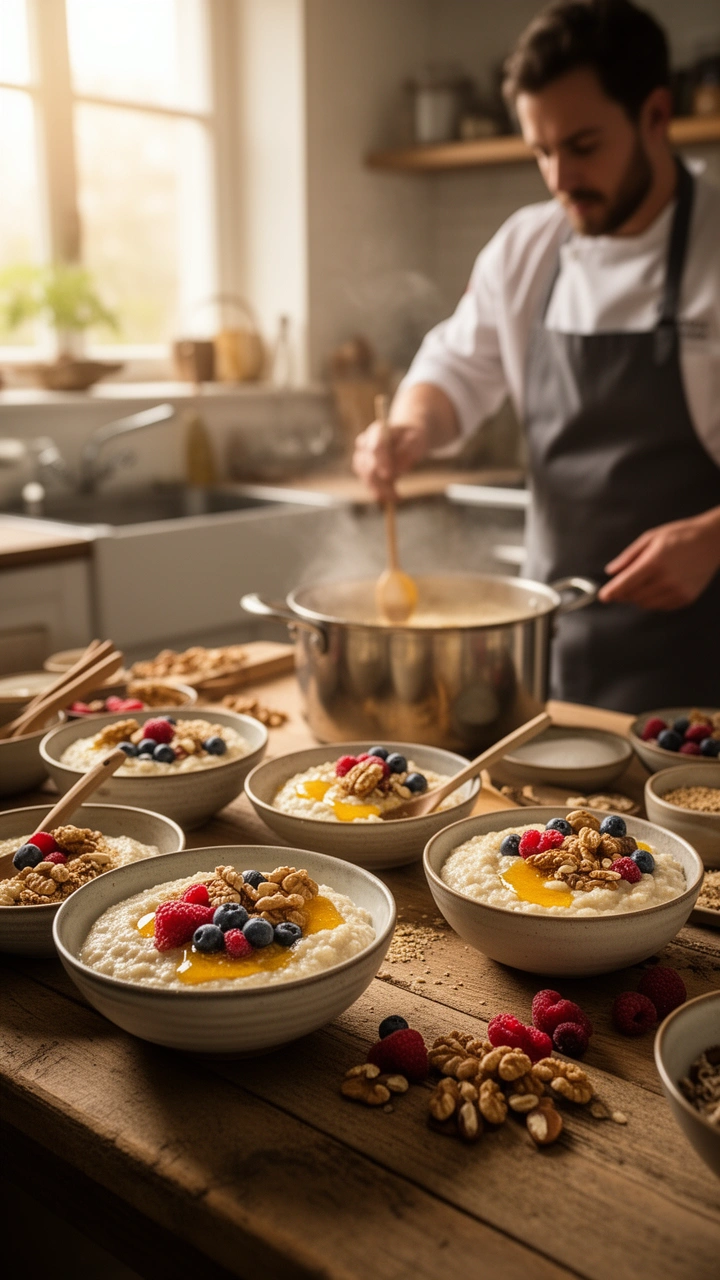
Porridge gets a bad reputation it doesn’t deserve. People picture watery, grey sludge from a school cafeteria, and they write it off entirely. But good porridge made properly with the right ratio, the right heat and the right toppings is one of the best breakfasts you can make. Full stop. So we gonna try to make a proper guide to make this a complete beginner friendly.
What You Need to Make Porridge
Base Ingredients (serves 1)
The recipe is simple, but the ratios and choices matter:
- ½ cup (45g) rolled oats , use rolled oats, not instant; the texture is significantly better
- 1 cup (240ml) milk , full-fat dairy or oat milk give the creamiest result; water works but produces a plainer bowl
- Pinch of salt , don’t skip this even in a sweet bowl; it makes everything taste more alive
- ½ tsp vanilla extract , optional, but it adds a subtle warmth that makes the base taste finished rather than plain
Toppings (per bowl)
- ½ cup (60g) fresh or frozen raspberries
- ½ banana, sliced
- 2 tbsp peanut butter
- 2 tbsp granola
- 1 tsp honey , optional drizzle to finish
These four toppings together create a bowl with great flavor contrast: tart raspberries, sweet banana, rich peanut butter, and crunchy granola. It’s a combination that actually keeps you full because you’re getting fruit, fat, protein, and slow carbs all in one bowl.
How to Make Porridge Step by Step
Step 1: Choose Your Oats
This step matters more than most people realize. Rolled oats (also called old-fashioned oats) give you the best texture , they cook in about 5 minutes and keep a slight chew that makes the porridge feel satisfying rather than mushy.
Instant oats cook faster but turn into a very soft, almost paste-like consistency that a lot of people find unpleasant. They’re fine in a pinch, but if you have the choice, go with rolled.
Steel-cut oats produce the most textured, hearty porridge, but they take 20–30 minutes to cook. Great on weekends when you have time, less ideal on a Tuesday morning when you need to be out the door.
Step 2: Get Your Ratio Right
The standard ratio for creamy stovetop porridge is 1 part oats to 2 parts liquid. So for ½ cup oats, you use 1 cup of milk (or a mix of milk and water).
If you prefer thicker porridge, start with a 1:1.5 ratio and add more liquid as needed. If you like it thinner and more pourable, go closer to 1:2.5. The ratio is personal , but starting at 1:2 gives you a reliable baseline every time.
Step 3: Cook It Low and Slow
Add your oats and milk to a small saucepan over medium to medium-low heat. Don’t crank the heat trying to speed things up , high heat causes the milk to scald on the bottom and your porridge ends up with a burnt flavour that no topping can fix :/
Stir regularly as it heats up. Once it starts to bubble gently, reduce the heat slightly and keep stirring every 30 seconds or so. The whole process takes about 5 minutes from cold liquid to finished porridge.
Step 4: Season Before You Finish
About a minute before you take the porridge off the heat, add your pinch of salt and vanilla extract. Stir them in and give the porridge one final taste.
This is the moment most people rush past, and it’s where a lot of bowls fall flat. Taste the oats , do they need a little more salt? Does the vanilla come through? A small adjustment here makes a real difference to the finished bowl.
Step 5: Build Your Toppings
Take the porridge off the heat and pour it into a bowl. Then build your toppings with intention rather than just dumping everything on at once.
Here’s how to build the raspberry, banana, peanut butter, and granola combination properly:
- Raspberries first , if using frozen, microwave them for 30–40 seconds first so they soften and release their juices into the porridge. Arrange them on one side of the bowl.
- Banana slices , fan them along the opposite side of the bowl from the raspberries
- Peanut butter , add while the porridge is still hot so it melts slightly into the oats; this creates a rich, nutty layer throughout the bowl
- Granola last , always add granola at the end so it stays crunchy; wet granola is a texture crime
- Honey drizzle , optional, but a light drizzle ties everything together
Keeping the toppings in distinct sections rather than mixing everything together gives you different flavor combinations in each spoonful and makes the bowl look noticeably better.
Why These Toppings Work So Well Together
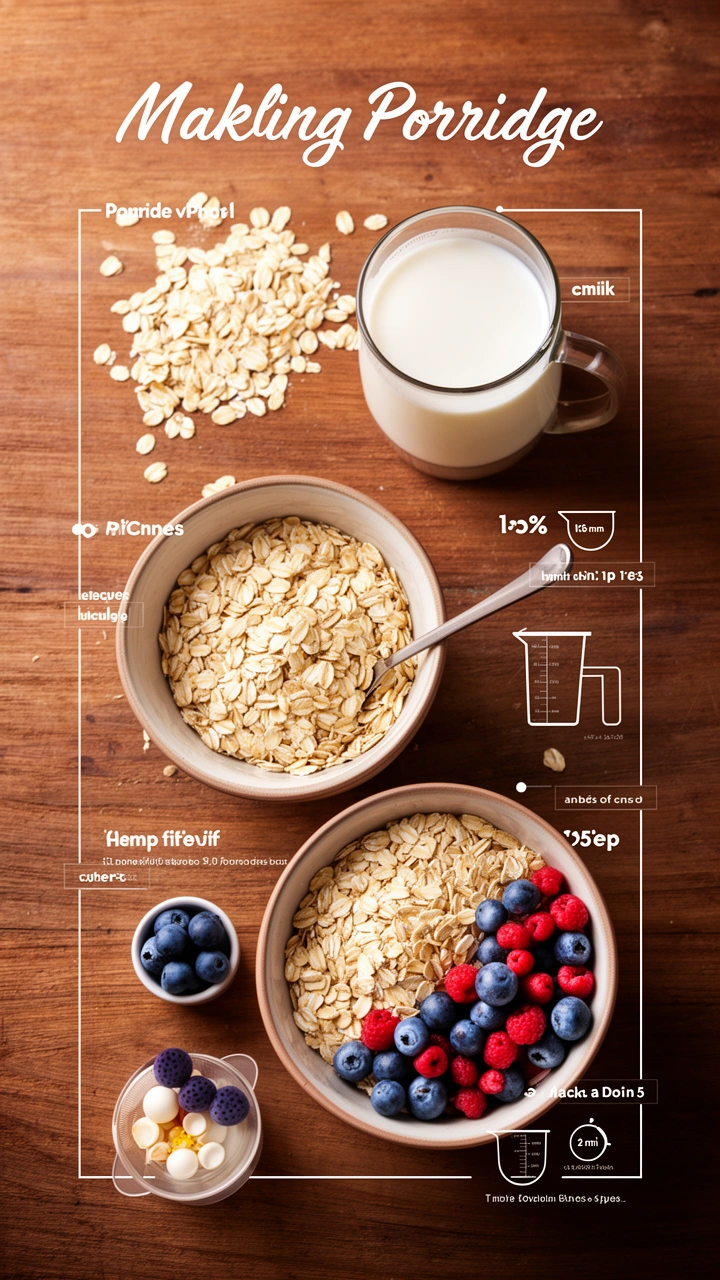
The raspberry, banana, peanut butter, and granola combination isn’t random , it hits every textural and flavor note a great breakfast needs.
Raspberries bring tartness and color. They cut through the richness of the peanut butter and keep the bowl from feeling too heavy. Frozen raspberries work just as well as fresh here and cost significantly less , keep a bag in your freezer at all times.
Banana adds natural sweetness and a creamy texture that complements the oats. It also brings potassium, which makes this bowl genuinely useful as a pre- or post-workout breakfast.
Peanut butter is the protein and fat anchor of the whole bowl. It makes the porridge more filling and adds a savory richness that balances the fruit. Use natural peanut butter , the kind with just peanuts and salt , for the best flavor and consistency.
Granola solves the one complaint people have about porridge: it can feel texturally one-dimensional. Two tablespoons of granola on top fixes that completely. FYI, homemade granola takes about 20 minutes to make and stores for two weeks , it’s one of those Sunday prep projects that pays off all week.
Stovetop vs. Microwave: Which One Should You Use?
The stovetop method produces noticeably creamier porridge. The slow, stirred cooking process helps the oats release their starch gradually, which gives you that silky texture that microwave porridge rarely achieves. If you have 10 minutes, always choose the stovetop.
The microwave method works when you’re short on time. Add oats and milk to a large microwave-safe bowl (it will bubble up , use a bigger bowl than you think you need), cook on high for 2–3 minutes, stopping to stir halfway through. The result is slightly less creamy but still perfectly edible and way better than skipping breakfast entirely.
| Stovetop | Microwave | |
|---|---|---|
| Time | ~10 minutes | ~3 minutes |
| Texture | Creamier, silkier | Slightly less smooth |
| Cleanup | One pan | One bowl |
| Best for | When you have time | Weekday rush |
IMO, the stovetop is worth the extra few minutes whenever you can manage it. But the microwave version with good toppings still beats most quick breakfast options out there.
Common Porridge Mistakes (and How to Fix Them)
It’s Too Thick
Add a splash of warm milk and stir it in. Porridge continues to thicken as it sits, so if it looks perfect in the pan it will be too thick by the time you eat it. Cook it slightly looser than you want.
It’s Too Watery
Cook it for another minute or two over low heat, stirring constantly. The oats will absorb the extra liquid. You can also add a small handful of oats and stir them in , they’ll thicken the bowl within a minute.
It Tastes Bland
This almost always comes down to two things: no salt and water instead of milk. Salt is the single most impactful seasoning you can add to porridge , try it and you’ll immediately taste the difference. Swapping water for milk or adding a splash of milk at the end also transforms the flavor significantly.
It Burned on the Bottom
The heat was too high. Lower it next time and stir more frequently. Once porridge burns on the bottom it’s very hard to recover , the burnt flavor spreads through the whole batch.
Tips for the Best Porridge Every Morning
A few habits that consistently improve the result:
Stir continuously during the last two minutes of cooking. This is when the porridge thickens rapidly and is most likely to stick. Keep the spoon moving.
Let it sit for 60 seconds before topping. It thickens slightly as it rests and the temperature drops to a more comfortable eating level. Porridge straight off the stove is hot enough to burn your mouth before you even notice the raspberries.
Add peanut butter while the bowl is hot. It melts slightly and integrates into the porridge rather than sitting as a cold, stiff blob on top. The difference in how it eats is significant.
Prep overnight oats the night before if mornings are a real struggle. The texture is different , cold and thicker , but all the same toppings work brilliantly and you’re eating breakfast at room temperature from the fridge rather than standing over a stove half asleep.
Make It Tomorrow Morning
How to make porridge comes down to four things: the right oats, the right liquid ratio, medium-low heat, and toppings that actually complement each other. Rolled oats cooked slowly in milk, finished with salt and vanilla, then topped with raspberries, banana, peanut butter, and granola , that’s a breakfast that earns its place in your daily routine.
It takes 10 minutes. It keeps you full for hours. And once you nail your version of it, you’ll find yourself looking forward to breakfast in a way you probably haven’t since you were a kid. Start tomorrow morning your bowl is waiting.
1
servings5
minutes5
minutes520
kcalIngredients
1/2 cup rolled oats
1 cup milk (full-fat dairy or oat milk recommended)
Pinch of salt
1/2 tsp vanilla extract (optional)
1/2 cup fresh or frozen raspberries
1/2 banana, sliced
2 tbsp peanut butter
2 tbsp granola
1 tsp honey (optional)
Directions
- Add the rolled oats and milk to a small saucepan over medium to medium-low heat.
- Stir regularly as the mixture heats, then reduce the heat slightly once it begins to bubble gently.
- Continue cooking for about 5 minutes total, stirring every 30 seconds or so, until the porridge is creamy and the oats are tender.
- About 1 minute before removing from the heat, stir in the salt and vanilla extract if using.
- Transfer the porridge to a bowl.
- Top with raspberries on one side and banana slices on the other.
- Add the peanut butter while the porridge is still hot so it melts slightly into the oats.
- Finish with granola on top and a light honey drizzle if desired.
Notes
- Use rolled oats for the best texture, and add granola at the very end so it stays crunchy. Frozen raspberries can be microwaved for 30–40 seconds first to soften them.

About the author
Written by Arman
Hi, I'm Muhammad Arman, a healthy food expert who is passionate about helping you build a better life through real, nourishing food. I share simple, practical tips and clean recipes because I truly believe that eating well should feel good, not complicated.
Published April 24, 2026 Updated May 27, 2026