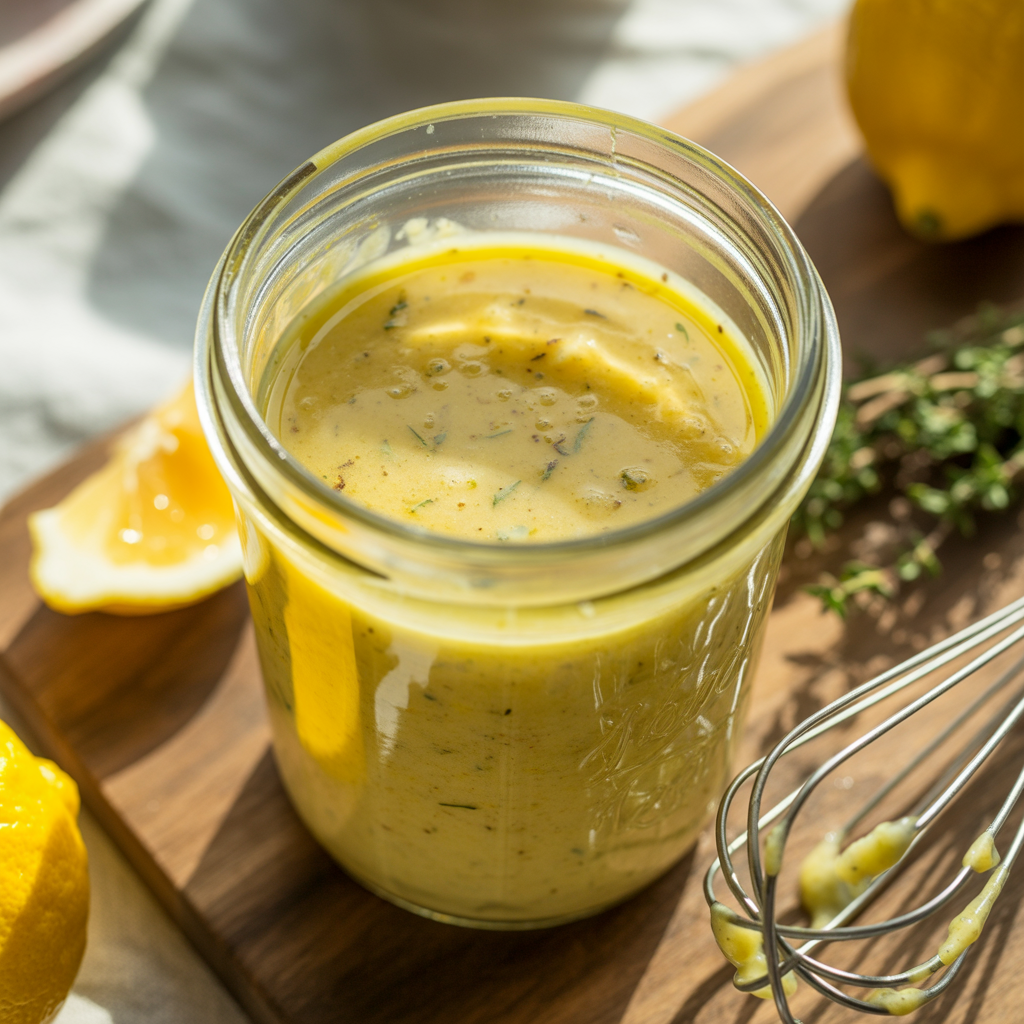

Some sauces take skill. This lemon dressing just takes a bowl and a whisk. I started making this after getting tired of spending four dollars on a bottle of dressing that tasted like it forgot what lemons were. One squeeze of fresh citrus, a few pantry staples, and you’ve got something so much better.
What Goes Into This Lemon Dressing
The Full Ingredient List
Here’s exactly what you need:
- 1/4 cup fresh lemon juice (roughly 2 medium lemons)
- 1 small garlic clove, grated
- 1 teaspoon Dijon mustard
- 1/4 teaspoon sea salt, plus more to taste
- Freshly ground black pepper, to taste
- 1/2 teaspoon honey or maple syrup (optional, but worth it)
- 1/4 to 1/3 cup extra-virgin olive oil
- 1/2 teaspoon fresh or dried thyme (optional)
How to Make Lemon Dressing
Step-by-Step Instructions
- Add the lemon juice, grated garlic, Dijon mustard, salt, pepper, and honey (if using) to a small bowl.
- Whisk everything together until combined.
- Slowly drizzle in the olive oil while continuing to whisk. Keep whisking until the dressing looks emulsified and slightly creamy.
- Taste and adjust. Too tangy? Add a little more olive oil. Needs more salt? Add a pinch.
- Stir in the thyme if you’re using it, then season one final time before serving.
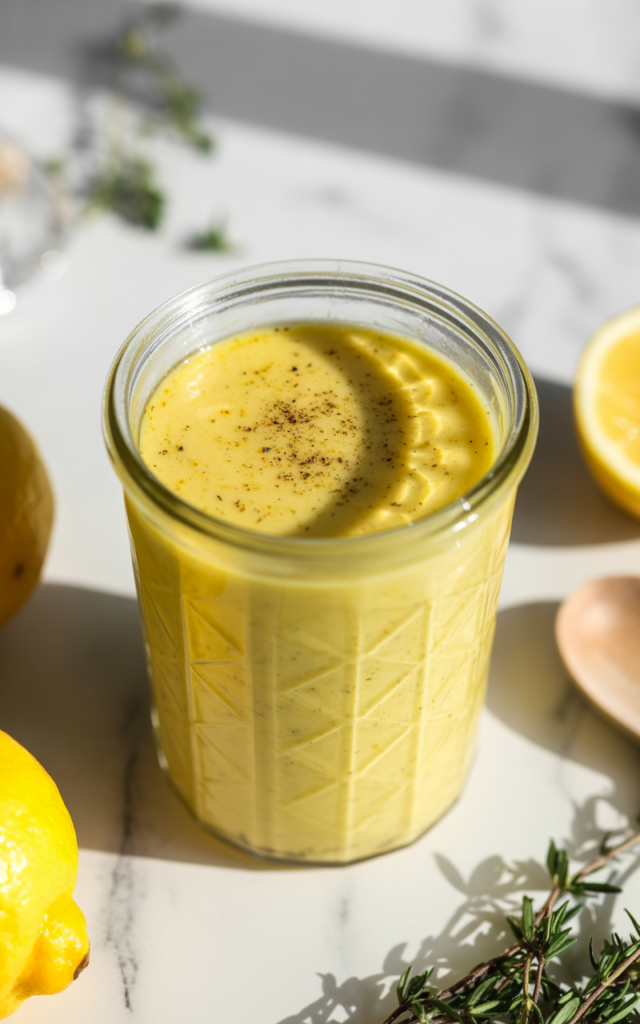
The whole process takes about two minutes. Truly.
The Jar Method (Even Easier)
If whisking feels like too much work (no judgment), just throw everything into a glass jar with a tight-fitting lid and shake it hard for about 20 to 30 seconds. You get a well-combined dressing with zero extra dishes. IMO, the jar method is actually better for weeknight meal prep because you can store it right in the same jar.
How to Adjust the Flavor
Too Tangy?
Add more olive oil, one tablespoon at a time. The extra fat softens the acidity without making the dressing taste bland. You can also add a touch more honey to balance the sharpness if oil alone doesn’t do it.
Too Mild?
Add more lemon juice or a tiny pinch more salt. Salt amplifies all the other flavors, so sometimes that’s all it needs.
Want More Depth?
The optional thyme addition genuinely transforms this dressing. Fresh thyme gives it a herby, slightly floral quality that pairs especially well with roasted vegetables and grain bowls. Dried thyme works too, though fresh is better if you have it.
What to Use This Lemon Dressing On
This is a seriously versatile dressing, and figuring out all the ways to use it is half the fun.
Salads
- Simple green salads with arugula, spinach, or mixed greens
- Greek-style salads with cucumbers, tomatoes, and feta
- Shaved fennel salads where the brightness of lemon really shines
- Kale salads where the acid helps soften the leaves slightly
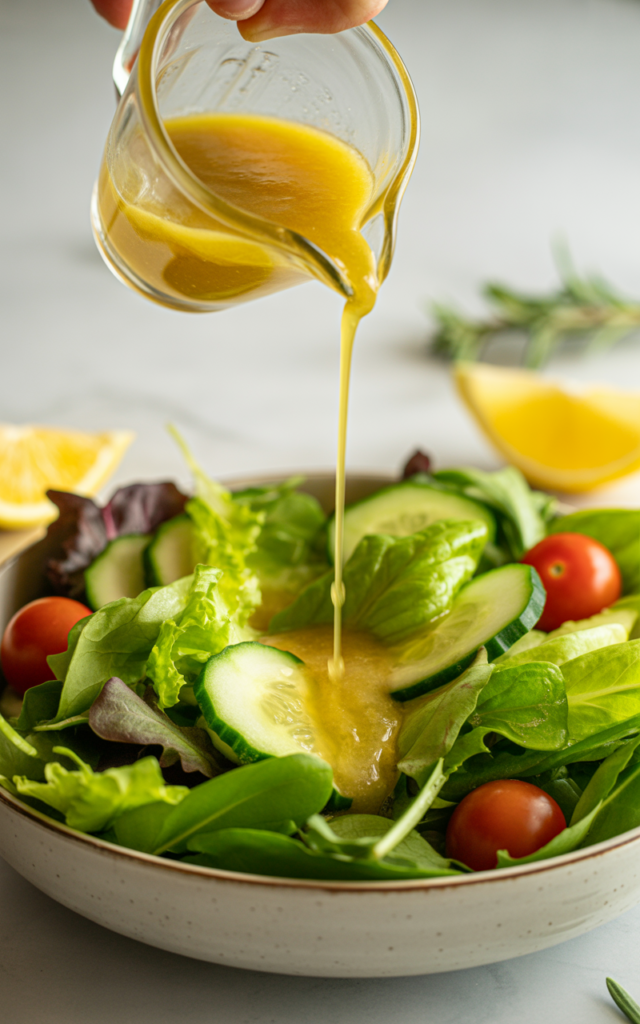
Grain and Veggie Bowls
- Farro or quinoa bowls with roasted chickpeas and fresh herbs
- Roasted vegetable platters drizzled generously right before serving
- Warm lentil salads where the dressing acts almost like a vinaigrette sauce
Proteins
- Grilled chicken or fish as a finishing drizzle
- Shrimp tossed right in the dressing after cooking
- Baked salmon with a spoonful on top before serving
FYI, this dressing also works beautifully as a marinade for chicken before grilling. Let the protein sit in it for 30 minutes and the lemon and garlic do serious flavor work.
Tips for the Best Lemon Dressing Every Time
Grate the Garlic, Don’t Mince It
Minced garlic leaves little chunks in the dressing that can feel harsh and uneven. Grating the garlic on a microplane turns it into a paste that blends seamlessly into the rest of the dressing. You get all the garlic flavor without biting into a raw piece unexpectedly.
Use Good Olive Oil
This dressing has very few ingredients, so the quality of each one matters. A grassy, peppery extra-virgin olive oil makes the dressing taste layered and interesting. A cheap, flavorless oil makes it taste flat. You don’t need to spend a fortune, but use something you’d actually want to taste on its own.
Don’t Skip the Honey (Even If You Think You Want To)
I know it sounds like an unnecessary sweetener, but the half teaspoon of honey doesn’t make the dressing taste sweet. It just rounds off the sharp edges of the lemon and garlic. Without it, the dressing can feel a little aggressive. With it, everything balances. Maple syrup works just as well if you prefer to keep things vegan.
How to Store Lemon Dressing
Refrigerator storage: Pour the dressing into an airtight glass jar or container and store in the fridge for up to one week. Glass works better than plastic because it doesn’t absorb the garlic smell or stain from the lemon.
What happens in the fridge: The olive oil will solidify and turn slightly cloudy when cold. That’s completely normal and doesn’t mean anything went wrong. The dressing is still perfectly good.
Before using from the fridge: Take the jar out and let it sit at room temperature for 5 to 10 minutes. Then stir or shake well before using. If it’s still too thick after warming up slightly, a quick 15-second shake usually fixes it.
Don’t freeze this dressing. The emulsification breaks down after freezing and thawing, and the garlic flavor turns harsh. Since it takes two minutes to make, just whip up a fresh batch when you need it rather than trying to freeze it.
Common Mistakes to Avoid
Even a simple recipe has a few ways to go sideways. Watch out for these:
- Using bottled lemon juice: It lacks the brightness of fresh and throws off the whole flavor balance.
- Adding oil too fast: Dumping all the olive oil in at once breaks the emulsion. Drizzle it in slowly.
- Over-garlicking it: One small clove is plenty. Raw garlic in dressing is powerful, and too much makes it sharp and unpleasant.
- Skipping the taste test: Every lemon is different in terms of acidity and intensity. Always taste and adjust before serving.
- Using old olive oil: Olive oil goes rancid over time. If yours smells musty or waxy, it will ruin the dressing. Use fresh oil.
Variations to Try
Lemon Herb Dressing
Add 1 tablespoon of fresh chopped parsley or basil along with the thyme. This version is especially good on pasta salads and anything Mediterranean-inspired.
Lemon Tahini Dressing
Whisk in 1 tablespoon of tahini before adding the olive oil. It makes the dressing creamier and nuttier, which pairs beautifully with roasted cauliflower or falafel bowls.
Lemon Vinaigrette with Shallot
Swap the garlic for one small shallot, finely minced. Shallots are milder and slightly sweeter than garlic, giving the dressing a more delicate flavor that works well on lighter salads.
Final Thoughts
This lemon dressing recipe really is one of those kitchen staples that improves everything it touches. Bright, fresh, and endlessly adaptable, it takes two minutes to make and keeps in your fridge all week. The balance of lemon, garlic, Dijon, and olive oil hits every flavor note you want from a great homemade dressing.
Once you start making it regularly, you’ll wonder how you ever settled for store-bought. Give it a try this week and see for yourself.
4
servings5
minutes20
minutes120
kcalIngredients
1/4 cup fresh lemon juice (about 2 medium lemons)
1 small garlic clove, grated
1 teaspoon Dijon mustard
1/4 teaspoon sea salt, plus more to taste
Freshly ground black pepper, to taste
1/2 teaspoon honey or maple syrup (optional)
1/4 to 1/3 cup extra-virgin olive oil
1/2 teaspoon fresh or dried thyme (optional)
Directions
- Add the lemon juice, grated garlic, Dijon mustard, salt, pepper, and honey (if using) to a small bowl.
- Whisk everything together until combined.
- Slowly drizzle in the olive oil while continuing to whisk until the dressing is emulsified and slightly creamy.
- Taste and adjust with more olive oil, salt, lemon juice, or honey as needed.
- Stir in the thyme if using, then season once more before serving.
Notes
- Store in a sealed jar in the fridge for up to 5 days; shake well before using. For the smoothest texture, grate the garlic instead of mincing it.

About the author
Written by Arman
Hi, I'm Muhammad Arman, a healthy food expert who is passionate about helping you build a better life through real, nourishing food. I share simple, practical tips and clean recipes because I truly believe that eating well should feel good, not complicated.
Published May 2, 2026 Updated May 8, 2026