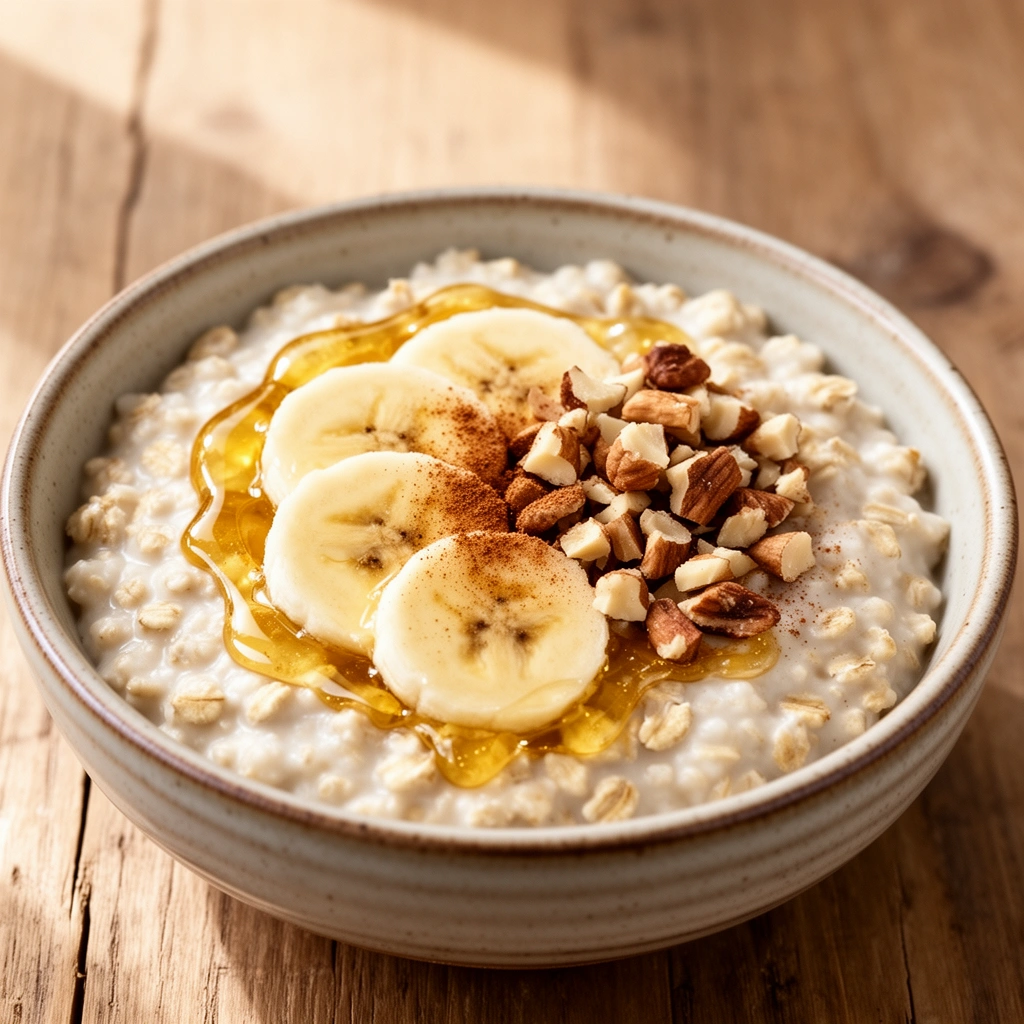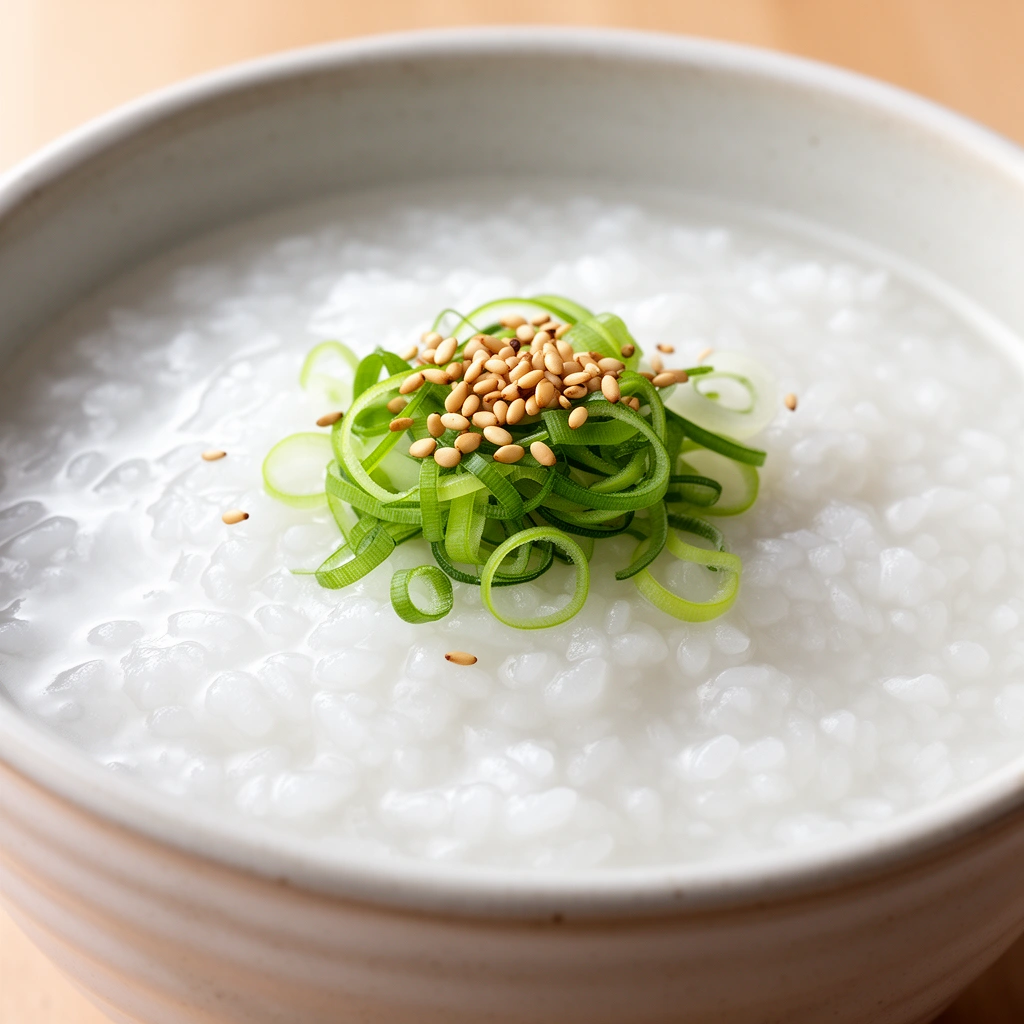

Some meals just wrap around you like a warm blanket. This Korean-style ground beef and vegetable rice porridge is exactly that , a silky, savory bowl loaded with mushrooms, carrots, peas, and kimchi that comes together in about 30 minutes. It’s the kind of recipe you reach for when you want something deeply satisfying without spending an hour at the stove.
Jump to RecipeWhat Is Rice Porridge, and Why Should You Make It?
Rice porridge goes by many names , congee, juk, okayu, zhou , depending on where you are in the world. The concept is simple: rice simmers in a generous amount of water or broth until the grains soften and break down into a thick, creamy porridge. The result is something that manages to feel both humble and luxurious at the same time.
This version leans Korean with the addition of sesame oil, sesame seeds, and kimchi. Those ingredients transform what could be a bland pot of soft rice into something complex, tangy, and genuinely crave-worthy. IMO, it’s one of the most underrated comfort food recipes out there.
The Ingredients You’ll Need
Every ingredient in this recipe plays a clear role. Here’s a full breakdown with measurements for 2–3 servings:
- 150g (¾ cup) white rice , short-grain rice works best for a naturally creamy porridge. Soak it in cold water for at least 20–30 minutes before cooking; soaked rice cooks faster and breaks down more evenly.
- 200g (7 oz) ground beef (or any ground meat) , ground beef gives the porridge richness and depth. Ground pork or turkey work equally well.
- 100g (about 1 cup) mushrooms, chopped , shiitake mushrooms are the move here for their umami flavor, but cremini or button mushrooms work just as well.
- 1 medium onion, finely chopped , adds sweetness and body to the base.
- 1 medium carrot, finely chopped , brings a subtle sweetness and a pop of color.
- ½ cup frozen or fresh peas , added toward the end to keep them bright and tender.
- 1 tablespoon sesame oil , this is what gives the porridge its signature nutty, toasty aroma. Don’t substitute with regular oil.
- 1 teaspoon sesame seeds , for garnish and a light crunch.
- Kimchi, to serve , don’t skip this. The tangy, funky kick of kimchi cuts through the richness of the porridge and makes every bite more interesting.
- Salt and pepper, to taste
- 1 teaspoon dashi powder (optional) , if you want to deepen the savory, umami flavor, a teaspoon of dashi powder goes a long way. Totally optional but highly recommended.
- 1 litre (4 cups) water , you’ll adjust this as you go depending on how thick you want the final porridge.
How to Make Ground Beef and Vegetable Rice Porridge
Step 1: Soak the Rice
Before anything else, soak your rice in cold water for 20–30 minutes. This step makes a real difference. Soaked rice cooks faster, breaks down more smoothly, and creates a silkier porridge. Drain the rice before adding it to the pot.
Step 2: Chop All the Vegetables
Finely chop the onion, carrot, and mushrooms. You want fairly small, uniform pieces so everything cooks evenly and blends naturally into the porridge. The smaller the chop, the more the vegetables meld into the broth rather than sitting on top.

Step 3: Cook the Ground Beef
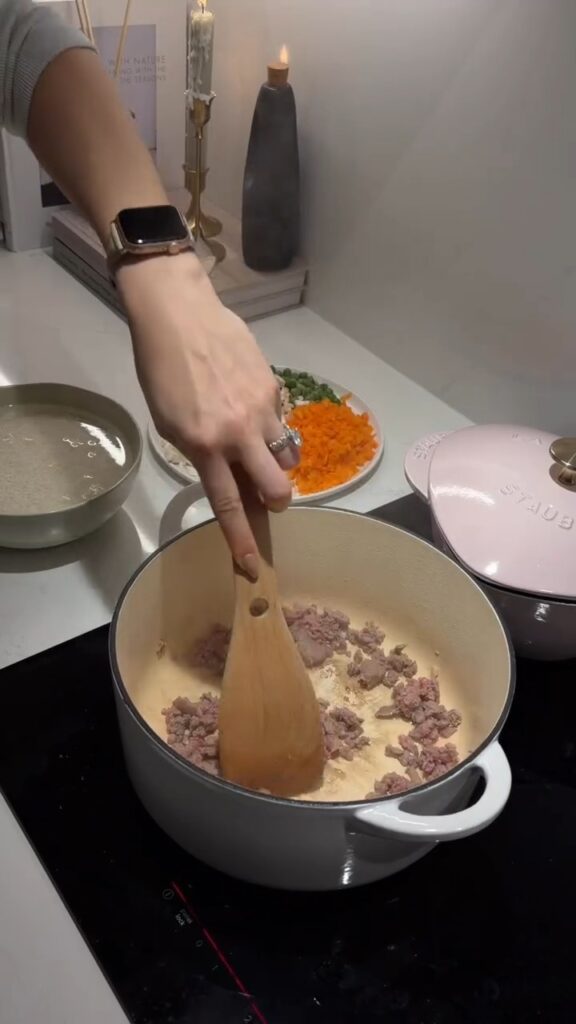
Heat your sesame oil in a medium-to-large pot over medium-high heat. Add the ground beef and break it up as it cooks. Stir frequently and cook until the meat browns all the way through, about 4–5 minutes. The sesame oil infuses the meat with a gorgeous nutty flavor right from the start , this is what makes the whole pot smell incredible.
Don’t drain the fat unless there’s an excessive amount. A little fat from the ground beef enriches the porridge and adds flavor.
Step 4: Add the Vegetables
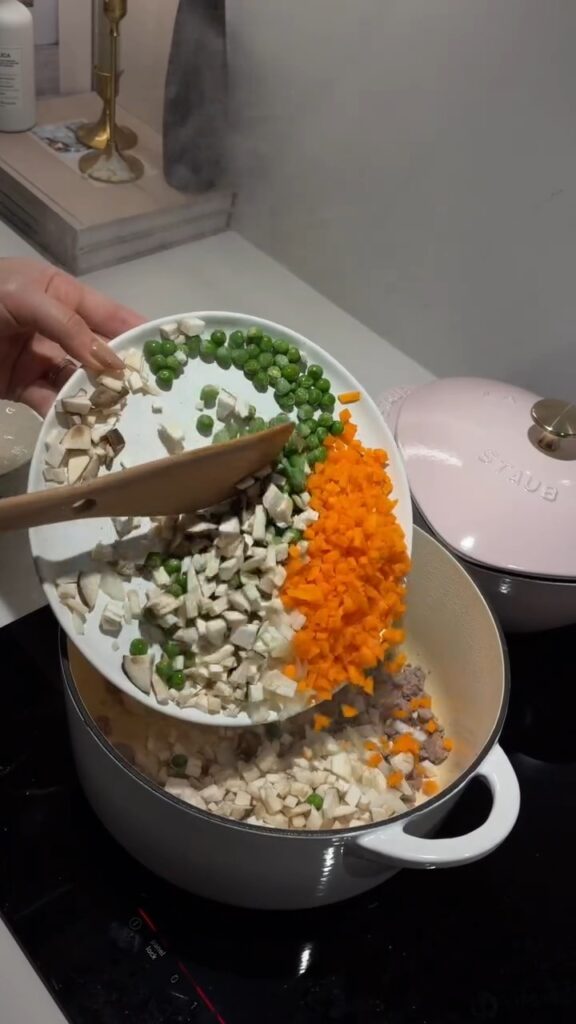
Add the chopped onion, carrot, and mushrooms directly to the pot with the cooked ground beef. Stir everything together and cook for another 3–4 minutes, until the onion softens and turns translucent and the mushrooms release their moisture.
Step 5: Add the Rice and Water
Add your drained, soaked rice to the pot and stir to coat the grains in the meat and vegetable mixture. Then pour in 1 litre (4 cups) of water. Stir everything together and bring the pot to a boil over high heat.
If you’re using dashi powder, stir it in now. It dissolves easily in the hot liquid and adds a deep, savory backbone to the whole pot.
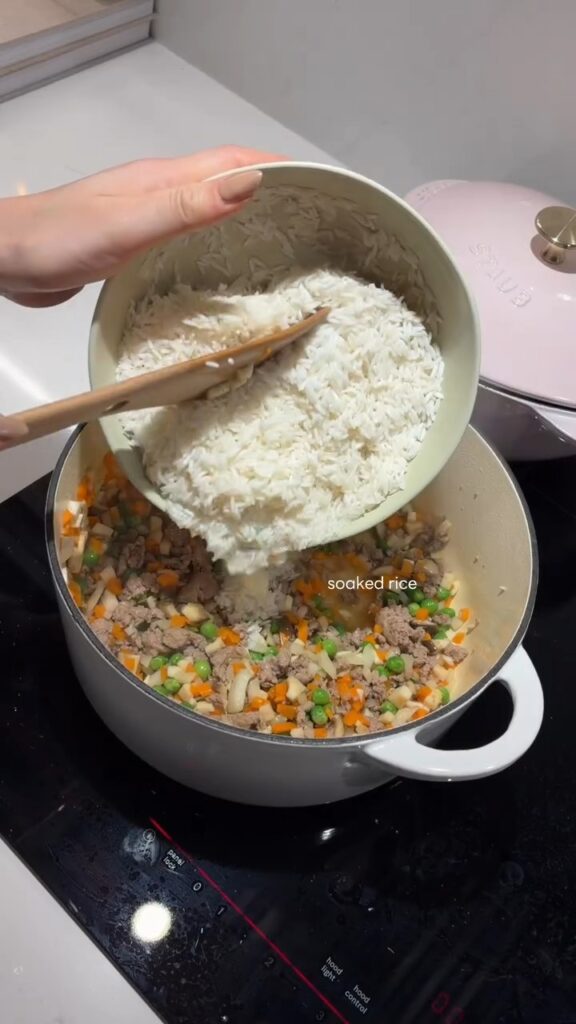
Step 6: Simmer Until Porridge
Once the pot reaches a boil, reduce the heat to medium-low and simmer uncovered for 25–30 minutes, stirring occasionally. This is where the magic happens. The rice gradually absorbs the liquid, softens, and begins to break down into that thick, creamy porridge texture.
Here’s what to look for at each stage:
- After 10 minutes: The rice has softened but still holds its shape. The liquid looks like a thin, milky broth.
- After 20 minutes: The grains start to break apart and the mixture thickens noticeably. Stir more frequently at this point to prevent sticking.
- After 25–30 minutes: The porridge reaches a thick, spoonable consistency. The rice has mostly broken down and the whole pot looks silky and cohesive.
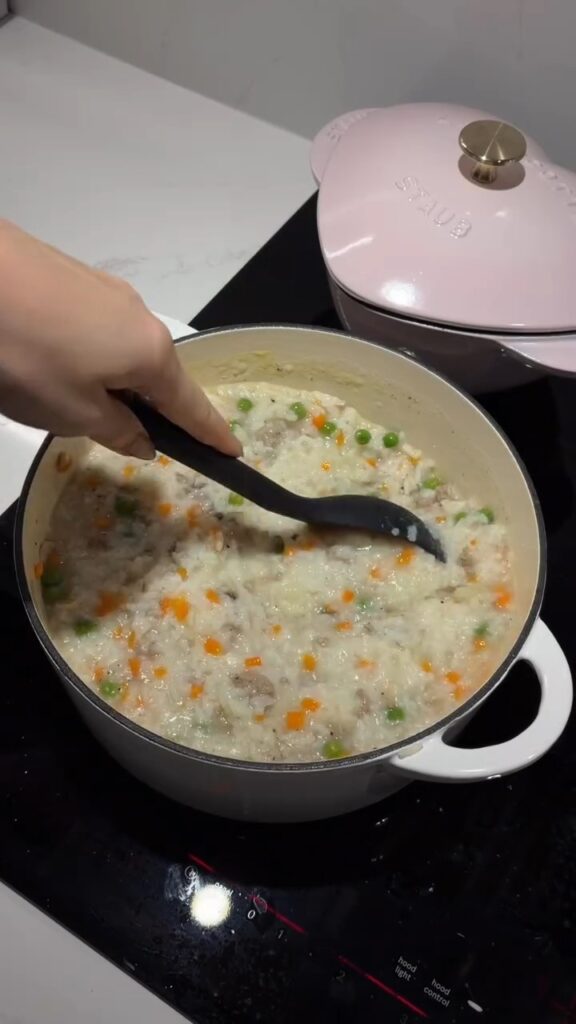
If the porridge thickens faster than expected or starts sticking to the bottom, add a splash more water and stir. The consistency should be loose enough to pour slowly from a spoon, not stiff like risotto.
Step 7: Add Peas and Season
In the last 5 minutes of cooking, stir in your peas. They only need a few minutes to warm through and soften, so adding them too early turns them mushy and grey. :/ Season generously with salt and pepper , porridge needs more salt than you’d expect, so taste as you go.
Step 8: Serve with Toppings
Ladle the porridge into bowls and finish with:
- A sprinkle of sesame seeds
- A side of kimchi (or spoon it right on top , no judgment)
- An optional drizzle of extra sesame oil for extra richness

Tips for the Best Rice Porridge Every Time
Don’t Skip Soaking the Rice
I know it feels like an unnecessary extra step, but soaking the rice cuts your cooking time by about 10 minutes and produces a noticeably smoother, creamier porridge. If you’re really pressed for time, even 10 minutes of soaking helps.
Keep Stirring in the Final Stretch
Once the porridge thickens up around the 20-minute mark, it needs your attention. Stir every few minutes to prevent the bottom from scorching. A scorched bottom introduces a bitter flavor that can ruin the whole pot.
Adjust the Water for Your Preferred Thickness
Some people like their porridge very thick and dense; others prefer it looser and more soup-like. Start with 4 cups of water and adjust from there. Add more water a little at a time if it thickens too fast. You can always add more water; you can’t take it out.
Kimchi Is Non-Negotiable (Seriously)
I know some people are on the fence about kimchi, but the tangy, spicy, fermented kick it adds is what makes this bowl complete. The porridge itself is rich and savory , the kimchi cuts right through that richness and adds brightness. It’s the perfect contrast. At least try it once before you skip it.
Why This Recipe Works So Well
It Uses Simple, Accessible Ingredients
You probably have most of these ingredients in your kitchen right now. Ground beef, rice, a couple of vegetables, sesame oil, and kimchi , that’s it. FYI, this is the kind of recipe that rescues you on a busy weeknight when grocery shopping didn’t happen.
It’s Flexible
This recipe adapts easily to what you have on hand. Swap the ground beef for ground pork, chicken, or turkey. Use whatever mushrooms look good at the market. Add spinach or zucchini instead of (or alongside) the carrots. The base technique stays the same regardless of the variations you throw at it.
It Genuinely Feeds Your Soul
There’s a reason rice porridge appears in some form across almost every Asian food culture. It’s warm, easy to digest, endlessly customizable, and deeply satisfying. This version with sesame oil and kimchi takes that classic comfort and adds real personality to it.
Variations Worth Trying
Spicy Version
Add 1–2 tablespoons of gochujang (Korean chili paste) along with the vegetables. It adds heat and a complex, slightly sweet spiciness that takes the porridge in a completely different direction.
Egg Topping
Drop a soft-boiled or poached egg on top of each bowl right before serving. The runny yolk mixes into the porridge and makes it even richer. Highly recommended.
Vegetarian Version
Skip the ground meat entirely and double the mushrooms. Add a teaspoon of soy sauce and the dashi powder for umami depth. The result is lighter but still incredibly flavorful.
Korean-style ground beef and vegetable rice porridge delivers everything you want from a weeknight meal: flavor, warmth, nutrition, and simplicity. Thirty minutes, one pot, and a handful of pantry staples are all it takes.

Homemade Rice Porridge – Ready in 30 Minutes
Course: Uncategorized3
servings10
minutes20
minutes400
kcalIngredients
150g (¾ cup) white rice
200g (7 oz) ground beef (or any ground meat)
100g (about 1 cup) mushrooms, chopped
1 medium onion, finely chopped
1 medium carrot, finely chopped
½ cup frozen or fresh peas
1 tablespoon sesame oil
1 teaspoon sesame seeds
Kimchi, to serve
1 teaspoon dashi powder (optional)
Salt and pepper, to taste
1 litre (4 cups) water
Directions
- Before anything else, soak your rice in cold water for 20–30 minutes. This step makes a real difference. Soaked rice cooks faster, breaks down more smoothly, and creates a silkier porridge. Drain the rice before adding it to the pot.
- Finely chop the onion, carrot, and mushrooms. You want fairly small, uniform pieces so everything cooks evenly and blends naturally into the porridge. The smaller the chop, the more the vegetables meld into the broth rather than sitting on top.
- Heat your sesame oil in a medium-to-large pot over medium-high heat. Add the ground beef and break it up as it cooks. Stir frequently and cook until the meat browns all the way through, about 4–5 minutes. The sesame oil infuses the meat with a gorgeous nutty flavor right from the start , this is what makes the whole pot smell incredible.
Don’t drain the fat unless there’s an excessive amount. A little fat from the ground beef enriches the porridge and adds flavor. - Add the chopped onion, carrot, and mushrooms directly to the pot with the cooked ground beef. Stir everything together and cook for another 3–4 minutes, until the onion softens and turns translucent and the mushrooms release their moisture.
- Add your drained, soaked rice to the pot and stir to coat the grains in the meat and vegetable mixture. Then pour in 1 litre (4 cups) of water. Stir everything together and bring the pot to a boil over high heat.
If you’re using dashi powder, stir it in now. It dissolves easily in the hot liquid and adds a deep, savory backbone to the whole pot. - Once the pot reaches a boil, reduce the heat to medium-low and simmer uncovered for 25–30 minutes, stirring occasionally. This is where the magic happens. The rice gradually absorbs the liquid, softens, and begins to break down into that thick, creamy porridge texture.
Here’s what to look for at each stage:
After 10 minutes: The rice has softened but still holds its shape. The liquid looks like a thin, milky broth.
After 20 minutes: The grains start to break apart and the mixture thickens noticeably. Stir more frequently at this point to prevent sticking.
After 25–30 minutes: The porridge reaches a thick, spoonable consistency. The rice has mostly broken down and the whole pot looks silky and cohesive.
If the porridge thickens faster than expected or starts sticking to the bottom, add a splash more water and stir. The consistency should be loose enough to pour slowly from a spoon, not stiff like risotto. - In the last 5 minutes of cooking, stir in your peas. They only need a few minutes to warm through and soften, so adding them too early turns them mushy and grey. :/ Season generously with salt and pepper , porridge needs more salt than you’d expect, so taste as you go.
- Ladle the porridge into bowls and finish with:
A sprinkle of sesame seeds
A side of kimchi (or spoon it right on top , no judgment)
An optional drizzle of extra sesame oil for extra richness
Notes
- Once the porridge thickens up around the 20-minute mark, it needs your attention. Stir every few minutes to prevent the bottom from scorching. A scorched bottom introduces a bitter flavor that can ruin the whole pot.

About the author
Written by Arman
Hi, I'm Muhammad Arman, a healthy food expert who is passionate about helping you build a better life through real, nourishing food. I share simple, practical tips and clean recipes because I truly believe that eating well should feel good, not complicated.
Published April 13, 2026 Updated May 15, 2026